Glaucoma attack in the Stuttgart area
Glaucoma attack in the Stuttgart area – book an ophthalmologist appointment now!

An acute angle closure attack is an absolute eye emergency that requires immediate medical attention – Glaucoma surgery. It is usually triggered by narrow-angle glaucoma and is characterized by a sudden increase in intraocular pressure.
The dramatic glaucoma symptoms are not only painful, but can lead to irreversible vision loss within a few hours. Here you will find out what symptoms you need to know and what first aid you can provide before you reach our eye center or the emergency room.


Glaucoma attack in the Stuttgart area
Glaucoma attack in the Stuttgart area – book an ophthalmologist appointment now!
An acute glaucoma attack is not an insidious process, but a medical eye emergency. It manifests itself in abrupt, extreme symptoms that you must not ignore.
The severe pain and rapid loss of vision are direct consequences of the massively increased intraocular pressure. With these signs, every minute counts to prevent irreversible damage to the optic nerve and thus complete loss of vision.


Imagine the pressure in your eye skyrocketing:
The sudden increase in intraocular pressure up to 60 mmHg or higher is the main danger. This extreme pressure pushes off the sensitive structures of the retina and optic nerve.
If the condition remains untreated, the acute lack of pressure of oxygen and nutrients quickly leads to vision loss and blindness. Rapid and comprehensive glaucoma diagnostics is important. Seek immediate medical attention for the symptoms mentioned to avoid irreversible damage.

An acute glaucoma attack poses a massive threat to your vision. It is fundamentally different from the chronic glaucoma, which develops gradually. During seizures, the intraocular pressure does not rise over weeks or months, but within a very short time to extreme values of 60 mmHg or higher. The cause is always a sudden disturbance in the aqueous humor drain.
The problem lies in the angle of the ventricle between the iris and the cornea. In narrow-angle glaucoma, this angle is anatomically narrower. If there is a sudden blockage (e.g. due to an expanding pupil in the dark), the drainage channel for the aqueous humor is abruptly blocked. The fluid accumulates in the anterior chamber. This leads to an explosive increase in eye pressure, which puts the optic nerve at acute risk.
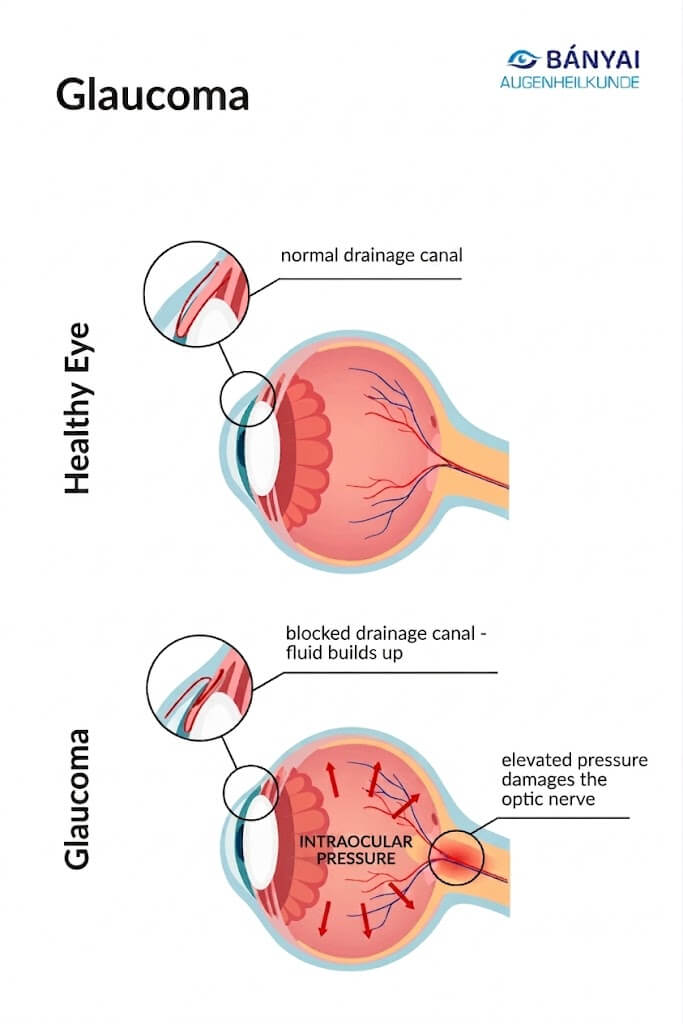

Chronic glaucomas are the most common eye disease of this type and develop gradually. Here, the drainage channel via the trabecular system is blocked, but not abruptly blocked, causing the intraocular pressure to rise slowly.
In contrast, the glaucoma attack leads to the acute risk of massive vision loss due to the sudden blockage. The chronic form often shows visual field defects late, while the seizure requires immediate emergency treatment.
An acute glaucoma attack does not tolerate delay: it is an emergency that must be treated immediately to save vision.
Do not hesitate and call the ophthalmic emergency service immediately or go to our eye center or the nearest emergency department immediately.
Every minute of delay can lead to irreversible vision loss.
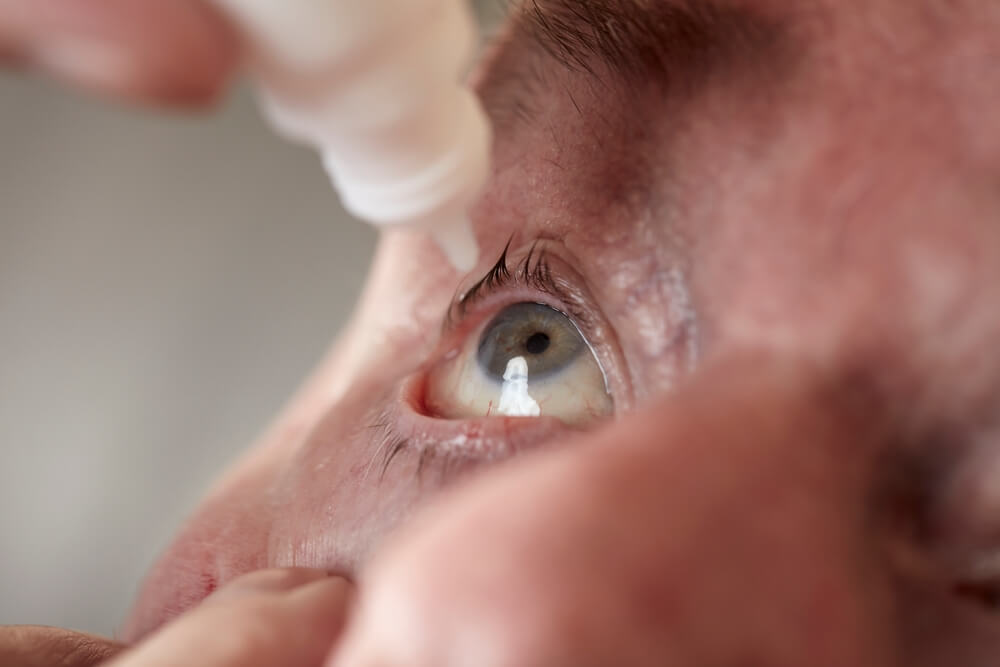
The primary first aid is the immediate lowering of the massively elevated intraocular pressure. This is done in the clinic by special drug treatment methods, including pressure-lowering eye drops and systemic medications (e.g. infusions).
This is the only way to quickly relieve the pressure on the optic nerve. Once the eye pressure is lowered, definitive glaucoma therapy can be initiated.
After the eye pressure has been stabilized as part of the first aid, a definitive green cataract treatment is necessary. The surgical technique aims to permanently open the angle of the ventricle and thus prevent a renewed attack of glaucoma.
Treatment is usually carried out in our eye center by minimally invasive laser procedures or a surgical procedure.
The standardized surgical technique is laser iridotomy. A special laser (YAG laser) is used to create a small opening in the iris. This creates an alternative drainage channel for the aqueous humor.
In the case of a massive or chronic blockage of the anterior chamber, our ophthalmologists may also recommend surgical procedures or preventive glaucoma surgery for permanent angular opening.

A patient who has had a glaucoma attack in one eye carries a high risk of this also happening in the second eye. Therefore, glaucoma therapy always includes preventive treatment of the healthy eye.
The aim is to permanently relieve the anatomically narrow angle of the ventricle by means of a prophylactic laser iridotomy or the removal of the lens and thus preserve vision.
Book your personal consultation online now—with no obligation!
Laser Eye Surgery, Diagnostics & Consultations on Ophthalmology at the Bányai Laser Eye Center – Dr. Liliana Bányai
Delaying treatment for a glaucoma attack leads to rapid destruction of the optic nerve and the retina. Since the massively increased intraocular pressure pushes out nerve fibers, this can lead to irreversible visual field failures and complete loss of vision within a few hours. To prevent permanent blindness, the most important measure is to lower the pressure immediately.
The vast majority of acute glaucoma attacks are triggered by narrow-angle glaucoma, in which the angle of the ventricle is suddenly blocked. In rare cases, however, other causes, such as inflammation or bleeding in the anterior chamber, can also lead to a sudden increase in intraocular pressure. Regardless of the exact cause, any sudden, extreme rise in eye pressure is considered an eye emergency and must be treated immediately.