


ONLINE CATARACT SURGERY ELIGIBILITY TEST!
Are you wondering if you’re a good candidate for cataract surgery? Take our online aptitude test now and find out your results in just a few clicks.

Cataract is a grayish clouding of the lens of the eye and in most cases an age-related eye disease. Learn all about the symptoms, causes and treatment options.

Cataract is an eye disease in which sufferers get a cloudy lens. The clouding of the lens in cataracts is gradual, which increasingly affects the quality of vision and leads to visual deterioration.
Vision is becoming obscured and increasingly grisly. The symptoms of cataracts severely affect everyday life and make driving more and more tedious. Light sources such as oncoming vehicles in the dark are perceived as very dazzling.
The cause in most cases is an age-related disease due to the aging process of the eye. This is why cataracts are also called age stars. Every second German citizen from the age of 50 suffers from cataracts. However, the causes can also be injuries to the eye or metabolic diseases.
Therefore, it is important to register for an annual check-up with the ophthalmologist.
Thanks to the constantly evolving technology in ophthalmology, cataracts can be treated very well. The best option is cataract surgery. On the following page you will find all the necessary answers to the questions about cataracts and their treatment options.


Symptoms: Creeping worsening and impairment of vision, sensitivity to light, the visual impression appears obscured, foggy and grayish, clouded lens.
Causes: Age-related from the age of 50, diabetes mellitus, metabolic disorder, nutrient deficiency, eye inflammation, eye injuries, congenital malformation, smoking, side effects of medication, strong exposure to light, e.g. UV radiation
Diagnosis: Initial consultation with the ophthalmologist, various preliminary examinations (e.g. on the slit lamp) to determine the eye disease and cause, if a disease such as diabetes is suspected, further examinations are needed.
Treatment: cataract surgery
Healing: Very good results are achieved in cataract surgery. After the treatment, you will regain up to 100% of your eyesight, depending on other pre-existing conditions. Better vision should not remain a dream space!
ONLINE CATARACT SURGERY ELIGIBILITY TEST!
Are you wondering if you’re a good candidate for cataract surgery? Take our online aptitude test now and find out your results in just a few clicks.
The initially creeping nebulisation of the field of vision with cataract symptoms is steadily increasing. The fog becomes denser over time and spreads to the entire field of vision. As a result, colors, contrasts and contours increasingly fade and seem to merge with each other. This not only leads to a deterioration in spatial perception, but also in the ability to orient oneself.
The most common cataract symptoms include:
Even if the disease occurs mainly in people from the age of 50, children can already develop it. The lens opacity is then either congenital or it develops over the course of the first years of life. A cataract in children is sometimes expressed by squinting. It should be treated as early as possible, because it can no longer be remedied when puberty is reached at the latest.
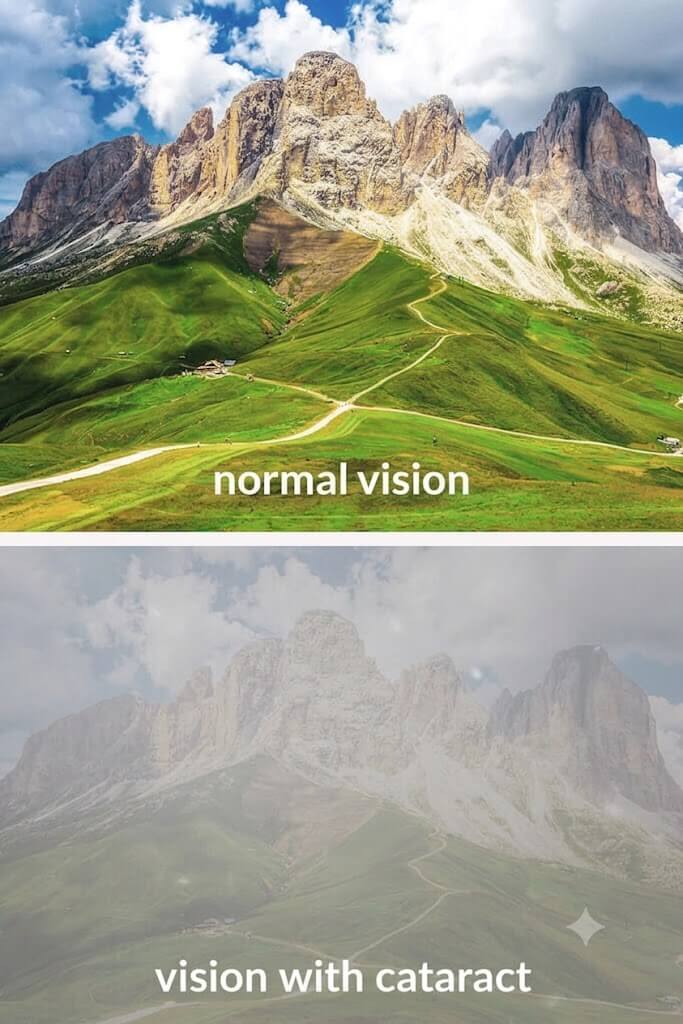
The symptoms of cataracts can differ depending on the stage. While vision gradually deteriorates at the beginning, those affected increasingly complain of glare sensitivity over time.
A kind of fog is created, which causes objects to be perceived as blurred or as if behind a veil.
Not all patients are equally affected by the following symptoms. However, everyday life can be heavily burdened, which is why early cataract surgery is recommended.
Other cataract symptoms that may occur in the course of the disease include:

How do I recognize a cataract? If you notice an increased sensitivity to light and notice that your gaze is obscuring, then this may be a sign of cataracts.
Problems with vision while driving also usually indicate a cataract. In such a case, you should consult your ophthalmologist for a definitive diagnosis and discuss the possibilities of treatment with him.
An untreated cataract can lead to blindness – it can be treated well and with lasting results with surgery. Reading glasses and contact lenses only help temporarily.
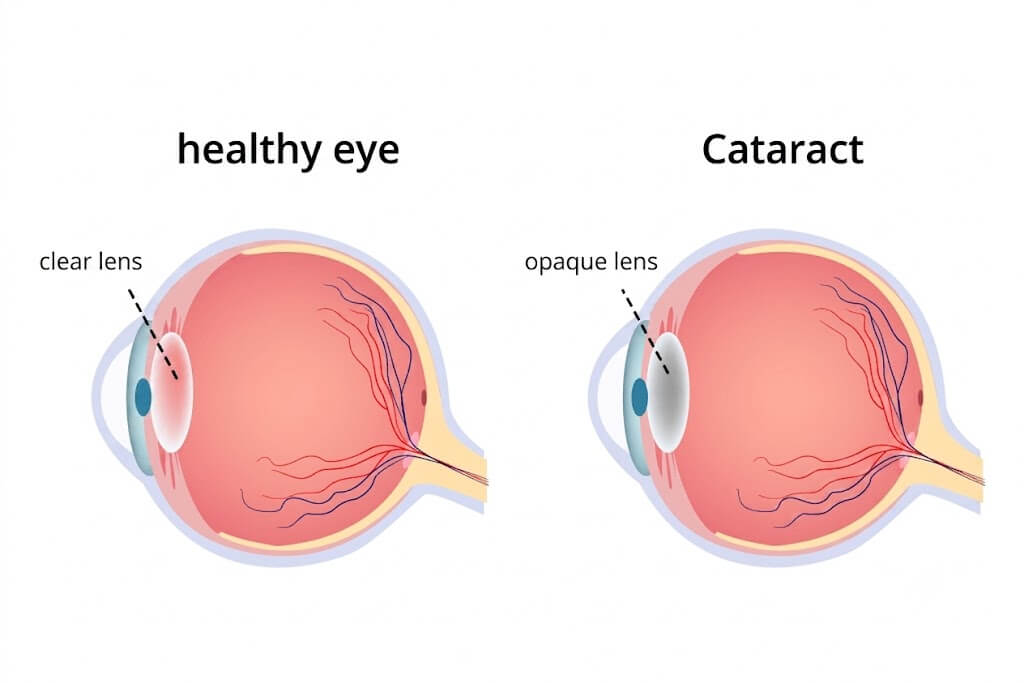
The cataract occurs in most cases – up to 90 percent – due to age. A healthy lens (which consists of a lens core, a lens bark and a lens capsule) usually ensures that the incident light is focused and creates a sharp, clear image on the retina. With increasing age, the flexibility of the natural lens decreases and leads to its cloudiness. Almost every person from about 65 years of age has a clouding of the lens of the eye. Almost half of 52- to 64-year-olds already suffer from cataracts without knowing it – because at first, often no visual impairment is noticeable.
However, cataracts can also occur as a result of diabetes mellitus, metabolic diseases or malformations, inflammation and injury to the eyes. In addition, heavy smoking and medication can lead to a gradual deterioration of vision. The cataract can also be congenital or develop during the first years of life.

If you notice a deterioration in your vision, you should definitely visit the ophthalmologist for a preliminary examination. Since a cataract can occur in almost all people due to age, an annual preventive examination should be on the program from the age of 50 at the latest. A detailed discussion on the collection of the medical history is supplemented by various tests and examinations. In addition to a general eye test, the following examinations are used to diagnose cataracts:
The various procedures allow a precise diagnosis, on the basis of which the further procedure in the treatment of cataracts is planned.
Other possible eye diseases (such as cataracts) or refractive errors such as presbyopia, nearsightedness and corneal curvature are also specifically examined. Especially with glaucomas, typical symptoms often go unnoticed for a long time, so regular checks are particularly important.
Read general information about the eye!

Unfortunately, the cataract cannot usually be stopped completely. As long as the center of the lenses is still clear, a change in vision can be improved by new eyeglass adjustments.
If cataracts remain untreated or are not treated in time, normal everyday life becomes almost impossible at an advanced stage. Visual performance can deteriorate so dramatically within a short time that it is equivalent to blindness.
However – and this is the really pleasant thing about cataract treatment using the latest surgical technique – cataracts can no longer regress once they have been repaired.
The artificial lens (intraocular lens) retains its vision best – no further interventions are necessary with us.
If desired, a corneal curvature can be corrected immediately.
In cataract surgery, your clouded natural lens is replaced by an artificial lens, the so-called multifocal lens (premium lens). Due to the presence of several focal points in multifocal lenses, the vision can be completely restored or improved.
Thanks to modern laser technology, the scalpel becomes superfluous. The operation by the surgeon is carried out without blades. Thanks to the small incision in the lens capsule, through the laser, the cataract surgery procedure is gentle. In addition, the use of the LENSAR laser prevents complications and allows for highly precise results.
Sharp vision and trouble-free reading without glasses is possible again with the new lens – and with a simple, fast and painless procedure. Normally, a local anaesthetic using eye drops is completely sufficient. General anaesthesia is only necessary in very rare cases. The procedure only takes about 15 to 20 minutes and your cataract is completely resolved after the eye surgery.
You will be monitored for a short time in the eye surgery center after the cataract surgery. Afterwards, you can go home and rest your freshly operated eyes.
The cataract surgery costs for cataracts result from the individual requirements and will be clarified in a personal conversation with the doctor.
Book your personal consultation online now—with no obligation!
Laser Eye Surgery, Diagnostics & Consultations on Ophthalmology at the Bányai Laser Eye Center – Dr. Liliana Bányai
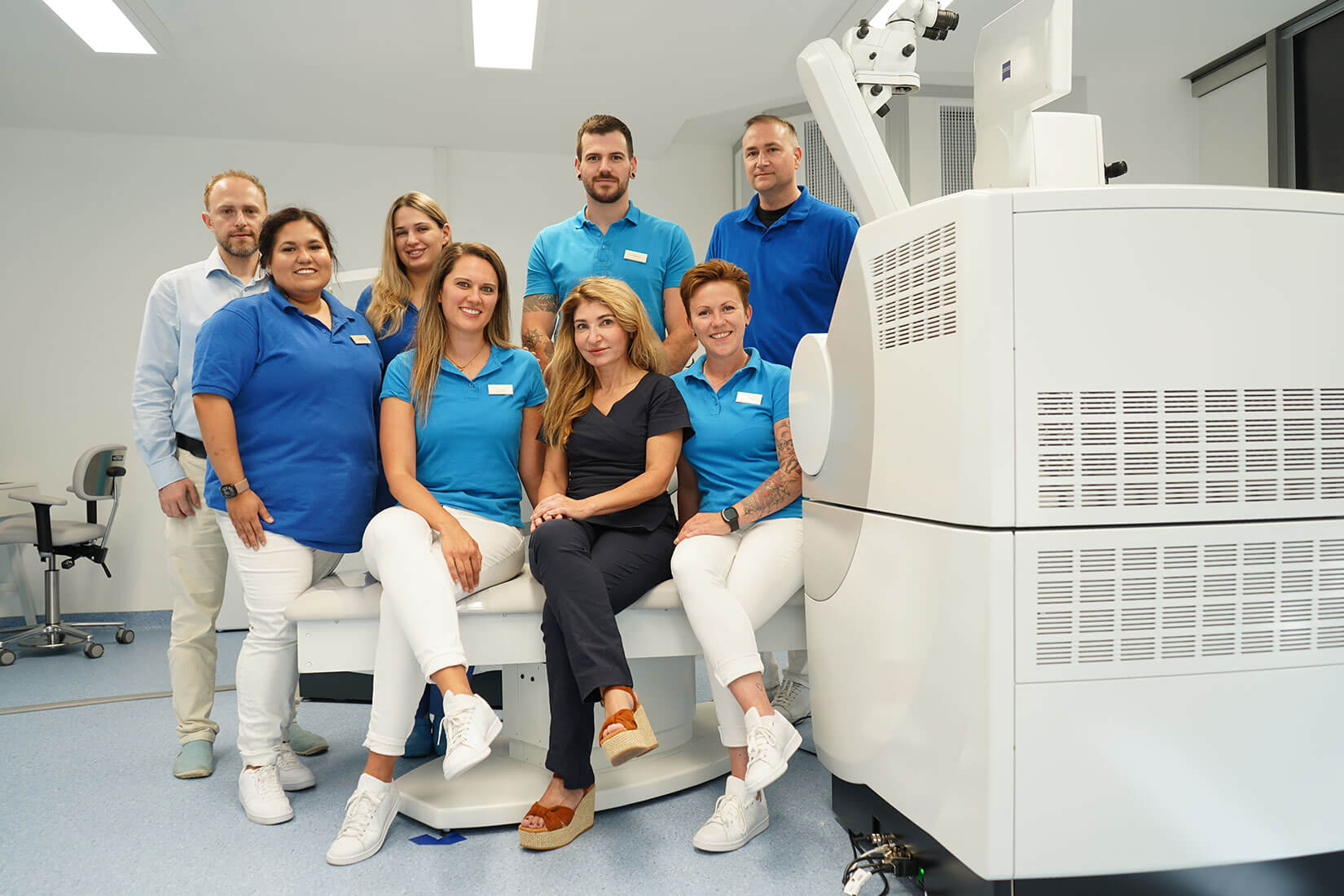
The good news first: the cataract can usually be cured without any problems – by means of a simple and painless procedure with lasting results. However, it does not regress on its own and without treatment, lens opacity usually increases. In the worst case, this can lead to blindness.
The only effective treatment is cataract surgery. Laser cataract surgery is one of the most frequently performed procedures. In Germany alone, this operation is performed around 700,000 times a year.
Symptoms of cataracts begin gradually. Cataracts cloud your vision or the lens in your eye. It seems like the world around you is surrounded by a grayish milky veil. The vision of the eye becomes increasingly blurred. The cataract alters the ability to perceive space. This can lead to blindness if they do not treat the cataract. Cataract is one of the most common causes of blindness worldwide.
For the most part, cataract is a sign of aging. Due to certain pre-existing diseases of the immune system such as diabetes or diseases of the eyes, cataracts can occur earlier.
Meanwhile, every second person between the ages of 52 and 64 is struggling with this disease. From the age of 65, more than 90% of those affected are already affected. Do you suffer from symptoms of cataracts? Book a personal consultation and examination at one of our eye centers. A doctor will provide you with competent advice. The examination on the eye will determine whether you are eligible for cataract surgery.
Yes. In most cases, the statutory health insurance covers cataract surgery, as this leads to a reduction in the quality of life. We also offer an option for financing.
Simply arrange a personal meeting with us. An examination will also take place as part of the conversation. Furthermore, we will inform you and answer all your questions about the topic and its treatment methods.
The cataract can lead to blindness. Therefore, cataract opacity should be treated or operated on. The cataract surgery takes less than 20 minutes and is performed with the LENSAR laser. For an accurate diagnosis and preliminary examination, simply book a personal consultation at one of our ophthalmologist practices. A doctor will provide you with competent advice.
The cataract cannot regress, but it can be corrected with a simple and harmless cataract surgery procedure.
Cataracts are often referred to as cataracts in medicine. The most common form of cataract disease is senile cataract. Cataracta senilis occurs in 90 percent of patients in old age. The eye lens loses flexibility as you get older. As a result, cataracts can cause clouding of the lens. However, younger people can also develop cataracts:
Cataract surgery is a promising method for successfully combating cataracts.
A multifocal lens has the decisive advantage that it works with several focal points. As a result, after lens implantation with multifocal lenses, patients usually no longer need any further visual aids at all distances. The power (refractive power) of this lens is calculated individually for you.
Rarely, an aftercataract can occur after a cataract operation. This leads to visual deterioration. Connective tissue and cell growths cloud the vision. This is due to the slight clouding of the capsule sac in which the lens was implanted.
The secondary cataract can occur after months or years in the operated eye.
In such cases, further surgery of the eye is recommended. A small intervention so that their visual quality is fully restored.
In cataracts, the natural lens is replaced by a so-called “intraocular lens”. There are 2 types of “intraocular lenses”:
We mainly use the multifocal lens. Thanks to this modern lens type, in addition to cataracts, another refractive error, namely presbyopia, can also be corrected.
The eye disease cataract is dangerous, as those affected go blind at an advanced stage. But don’t worry, cataract disease starts gradually and blindness does not happen overnight. It is therefore important to have a regular check-up from the age of 50.
When to operate on a cataract depends on several factors. This primarily includes visual impairment. In some professions and also when driving, a certain visual performance is a mandatory prerequisite. In such cases, surgery is necessary at an early stage.
A congenital cataract should be operated on as soon as possible after diagnosis. Only then will children have the chance to learn to see correctly.
A cataract surgery in the middle stage is recommended. Accurate information will bring an accurate examination to your ophthalmologist.
Usually the cataract progresses slowly. In the beginning, the cataract hardly restricts vision. In the final stage, however, blindness occurs. Therefore, cataract surgery in the middle stage is recommended.

