
ONLINE Glaucoma Surgery Eligibility Test
Are you wondering if you’re a good candidate for glaucoma surgery? Take our online aptitude test now and find out your results in just a few clicks.

The intraocular pressure (IOP) is the central measured value in the fight against glaucoma. A permanently too high IODINE level is the main risk factor for this treacherous eye disease. Without timely diagnosis and treatment, cataracts can lead to steady deterioration and irreversible loss of vision.
We will show you why precise measurement is so crucial in glaucoma diagnostics and which modern therapies help to protect your optic nerve.
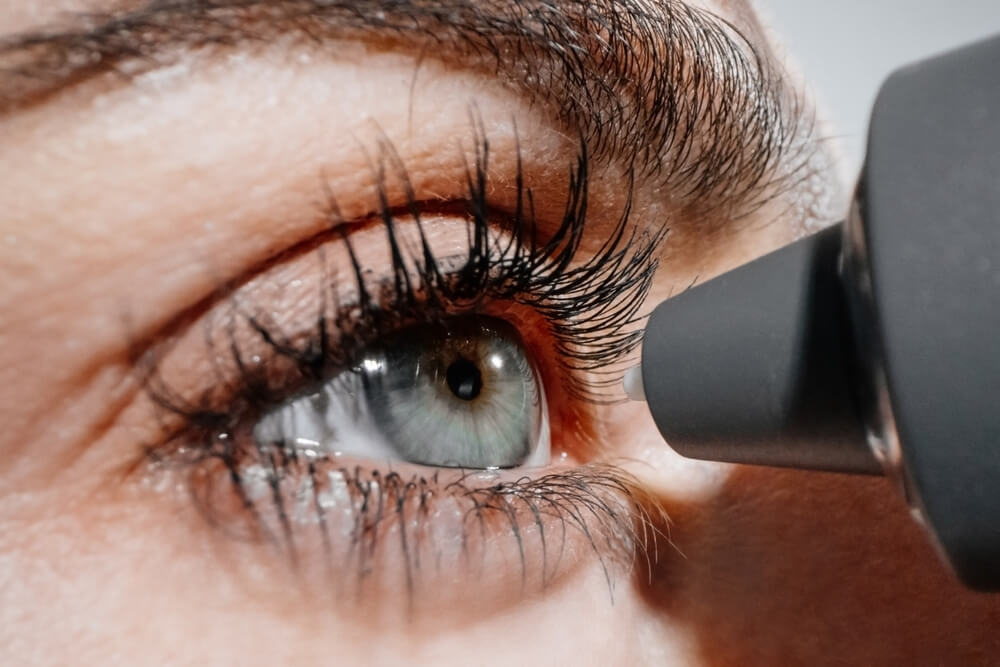
Intraocular pressure is essential for the health of your eyes. It represents the necessary balance between the production and the outflow of the so-called aqueous humour. An increased pressure is created when this delicate balance is disturbed.
If the IODINE remains untreated, it will damage the optic nerve over time. This leads to an increasing restriction of your field of vision, the area of vision that you can perceive without eye movement. About two in 100 people over the age of 40 are affected by glaucoma.

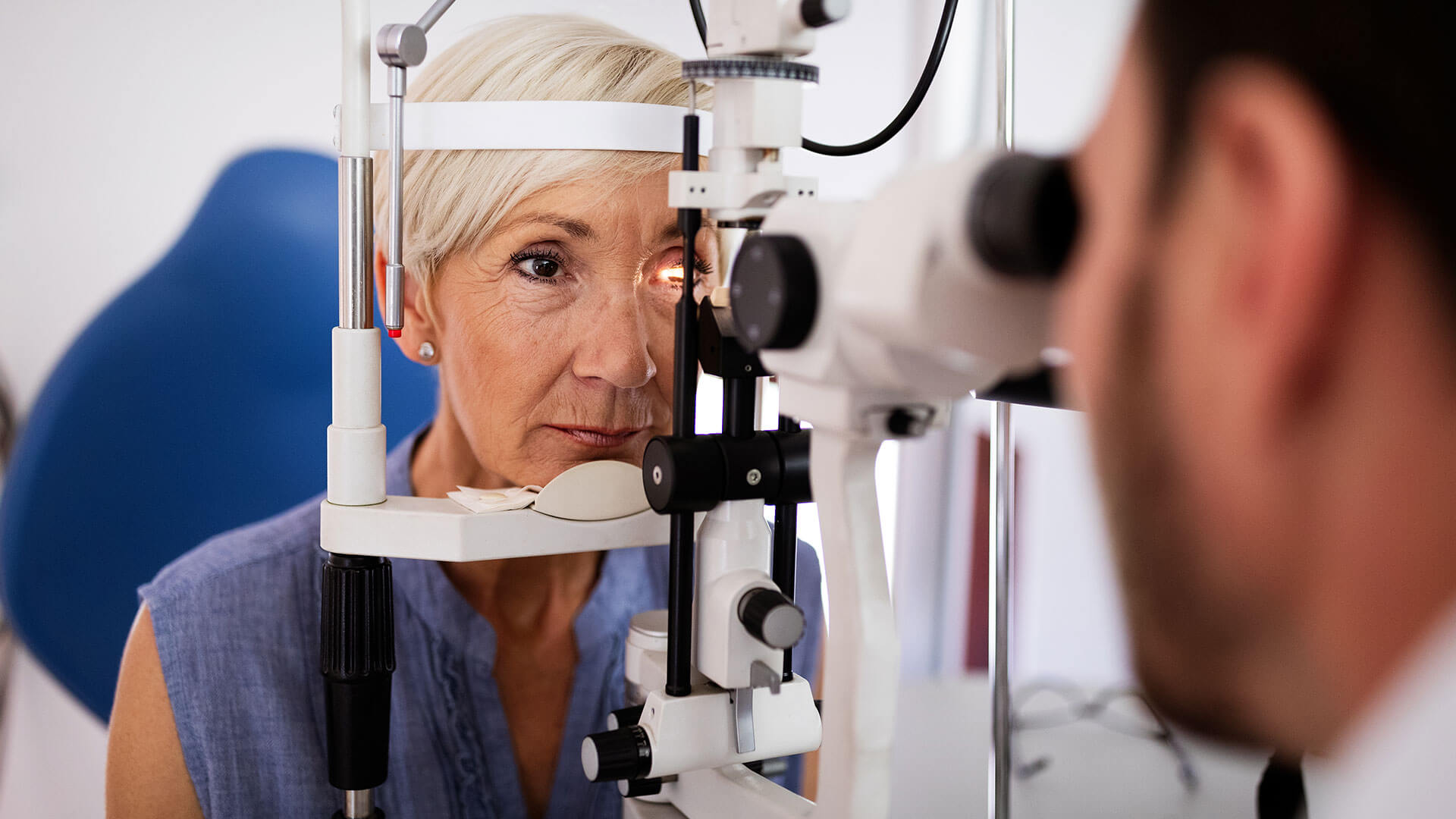
Knowing your measured intraocular pressure (IOP) is just the first step. Glaucoma prevention does not stop here: a measurement result must always be considered in the context of individual optic nerve health.
Only the combination of the IOP value, the corneal thickness measurement and the examination of the optic nerve shows whether there is a need for action. We evaluate the results precisely to preserve your vision in the long term.
From a medical point of view, the normal intraocular pressure is usually between 10 and 21 mmHg (millimetres of mercury). Values above 21 mmHg may already indicate an increased risk. However, this range is only a statistical average that needs to be considered individually.
For glaucoma prevention, it is important to know that a value in the normal range does not exclude the disease. Therefore, the examination of the ophthalmologist is essential to detect damage to the optic nerve at an early stage.
The so-called normal pressure glaucoma is treacherous, as the intraocular pressure here is in the statistical normal range (below 21 mmHg). Nevertheless, the optic nerve is irreversibly damaged.
This makes it clear that IODINE is not the only indicator of glaucoma. That is why we always supplement the measurement with advanced imaging methods. Annual glaucoma screening from the age of 40 is so important to detect and treat this form of the disease at an early stage.
| IOD value (mmHg) | Medical classification | Significance for glaucoma risk |
|---|---|---|
| 10–21 mmHg | Statistical normal range | Does not rule out glaucoma (normal pressure glaucoma). Annual pension from 40 is recommended |
| 21 mmHg | Increased intraocular pressure | Significantly increased risk of glaucoma. Requires prompt, detailed diagnostics, such as OCT and visual field measurement. |
| 40 mmHg | Very high to massively increased pressure | Acute danger of a glaucoma attack requiring immediate treatment. |
ONLINE Glaucoma Surgery Eligibility Test
Are you wondering if you’re a good candidate for glaucoma surgery? Take our online aptitude test now and find out your results in just a few clicks.
A diagnosed high intraocular pressure requires quick action. This is crucial to stop the progressive damage to the optic nerve. We detect the danger at an early stage through state-of-the-art diagnostics.
The risk of vision loss is real, because glaucoma is often only noticed in advanced stages

An acute glaucoma attack is an ophthalmological emergency. It occurs when the angle of the chamber is suddenly blocked and the IODINE rises abruptly and massively. Symptoms include severe eye pain, nausea, and rapid visual deterioration.
If you notice these symptoms, please seek emergency ophthalmological care immediately.
An untreated or too high IODINE leads to a steady damage of the retinal nerve fiber layer (RNFL) and the optic nerve. The resulting loss of visual field is often noticed late.
This is what is actually dangerous about the glaucoma: it progresses unnoticed. Our comprehensive diagnostics will protect you from this loss.
If the intraocular pressure is too high, a targeted lowering is the only way to relieve the optic nerve. The choice of treatment always depends on your individual needs.
In most cases, treatment begins with special glaucoma drops. These lower intraocular pressure by either reducing the production of aqueous humor or improving drainage. The drops must be used lifelong and disciplined.
SLT (Selective Laser Trabeculoplasty) is an effective and gentle laser treatment. Here, the trabecular structure, the outflow area of the aqueous humor, is specifically treated with a laser.
This improves the drainage of aqueous humor and thus lowers the IODINE level for a long time. SLT can often reduce or even replace drop therapy.
If the IODINE cannot be sufficiently lowered by drops and lasers, we offer various surgical procedures. Trabeculectomy creates a new drainage path for the aqueous humor (drainage cushion) during a glaucoma operation.
In addition, cataract surgery can reduce pressure by removing the body’s own lens. This can be an effective option in combined cases.
Book your personal consultation online now—with no obligation!
Laser Eye Surgery, Diagnostics & Consultations on Ophthalmology at the Bányai Laser Eye Center – Dr. Liliana Bányai
The intraocular pressure is a dynamic value that changes over the course of the day. A single measurement is therefore not sufficient. In order to optimally protect your optic nerve, regular and comprehensive preventive care is crucial.
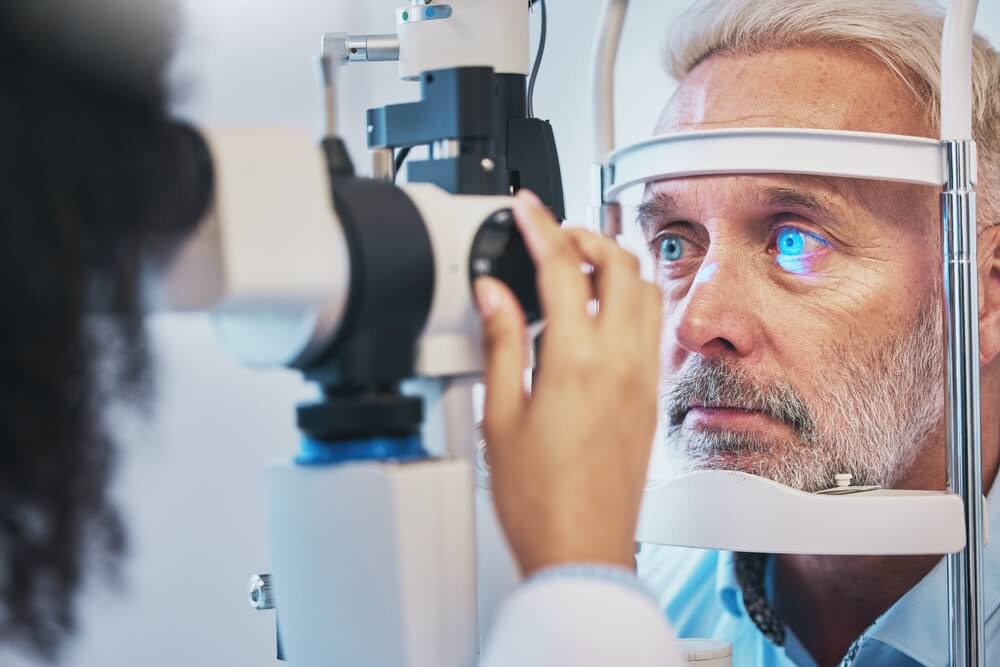
Optical coherence tomography (OCT) provides high-resolution images of the optic nerve head and the retina. Glaucoma Oct allows for the early detection of changes. It summarizes the structure of the optic nerve head and the retina. Field of view measurement (perimetry) tests your field of view for limitations. This combination of IOP measurement, OCT and visual field is indispensable for a reliable diagnosis.
After diagnosis, we determine your individual target pressure together. This depends on the degree of optic nerve damage and other risk factors. Regular checks (annual glaucoma screening from 40) are crucial to check whether the target pressure is reached. Your personal aftercare plan will help you to actively contribute to the preservation of your eyesight.
If glaucoma is diagnosed or suspected, annual checks of intraocular pressure are strongly recommended. In addition, it is important to supplement the measurements with a glaucoma Oct and the visual field measurement. Only these regular, comprehensive preventive examinations protect the optic nerve from progressive damage. Do you want to set your control plan? Book your non-binding aptitude test now
Lifestyle can slightly affect intraocular pressure. Factors such as excessive coffee consumption in certain sports (yoga with head-down postures) and sleep apnea can temporarily increase IODINE. However, it is important to note that a healthy lifestyle does not replace regular monitoring and treatment by the ophthalmologist. Talk to us about adjustments to your everyday life.
No, intraocular pressure is the most important risk factor, but not the only diagnosis in cataracts. The actual glaucoma is only present when there is demonstrable damage to the optic nerve and a restriction of the visual field. Therefore, in addition to the IODINE, we also measure the optic nerve structure using OCT and carry out a visual field measurement. Find out more about the detailed diagnostics here.