


ONLINE CATARACT SURGERY ELIGIBILITY TEST!
Are you wondering if you’re a good candidate for cataract surgery? Take our online aptitude test now and find out your results in just a few clicks.

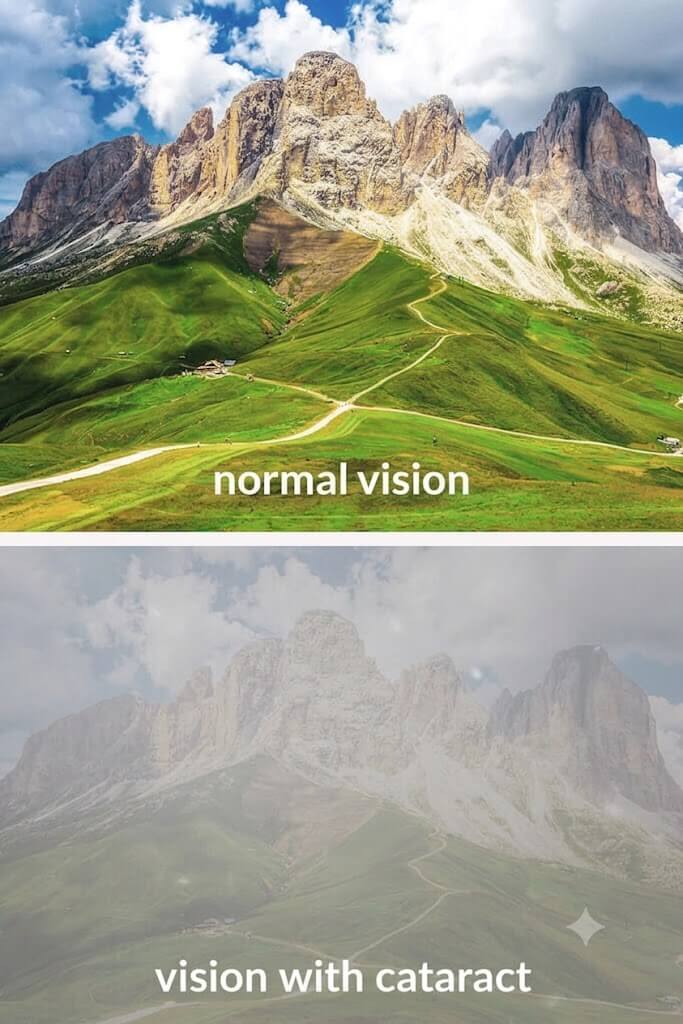
The symptoms of cataract disease are often manifested by creeping poorer vision or pale colors. In addition, cataracts can cause impaired vision, increased glare sensitivity, or obscured, foggy, and greyish vision.
These symptoms are often self-perceived by people affected by cataracts. Your ophthalmologist may also detect signs of lens opacity during check-ups and suggest treatment. We at Bányai Augenheilkunde would be happy to advise you on a possible cataract surgery.
The cataract symptoms can be detected early by an ophthalmologist. Cataract, also known as cataract in ophthalmology, is a clouding of the lens of the eye and is often only detected late. That is why it is important to carry out annual check-ups with the ophthalmologist from the age of 50. Because cataracts are usually an age-related disease.
Almost 50 percent of people in Germany suffer from cataracts from the age of 50. However, it can also be caused by metabolic diseases, long-term medications such as cortisone or injuries to the eye.
That is why we would like to introduce you to these tips, which can promote early detection and encourage you to book an appointment with the ophthalmologist.t (perimetry).
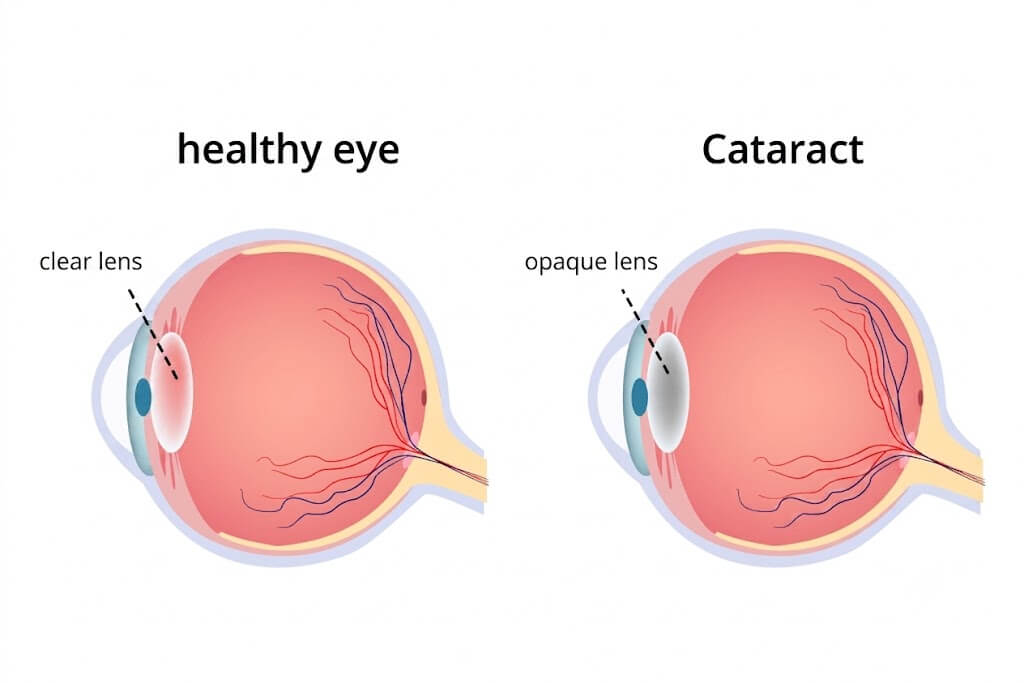

The cataract symptoms, also called cataract symptoms, begin gradually. However, an ophthalmologist can detect these symptoms at an early stage during a preventive examination. As with a camera, opacity of the eye lens impairs the refraction of light rays in the eye. The incident light is scattered and can no longer reach the retina.
This leads to the following cataract symptoms, which makes it possible to recognize this eye disease.
By early detection of cataracts and proper eye surgery (cataract surgery), where the cloudy lens is replaced by a new lens, a quick cure can take place, allowing you to see better again. The procedure of a cataract surgery is usually short and gentle. The healing process after cataract surgery usually takes two weeks, but there are some things to consider.
If you are familiar with these symptoms and signs, the ophthalmologist will provide you with information. Caution is advised here, because: In the advanced stage of lens opacity, it can even lead to blindness of the affected eye in a short time.
The first signs of cataracts usually start unnoticeably. In the event of a cataract, your vision is usually gradually lost and sharp vision is no longer possible. The steadily increasing loss of vision is also one of the symptoms. You will not experience any pain, burning of the eyes or similar symptoms.
You will also recognise this if your view of the environment deteriorates and it is only perceived as blurred. In this case, it seems as if you are looking through the fog or a frosted glass – your vision is grayish or milky.
The cataract affects your eyesight more and more. Do you like reading books? Do you like to watch TV? But over time, you notice that you have to strain your eyes more and more, reading glasses no longer help and notice a significant deterioration in vision?
Even if you are farsighted, it can happen, among other things, that you suddenly have a good view of the nearby area. But look into the distance, perceive everything more blurred.
Over time, the contrasts of colors and contours also diminish more and more. In addition to the blurred vision, the familiar colours also clearly lose their usual luminosity and the contours of the objects merge more and more into each other.
When driving, they are now sensitive to oncoming car headlights or other light sources. However, they can also be greatly irritated by the street lights or the low sun.
This can limit you so much through the clouded lens that it is almost impossible to see anything else. Due to the changing light conditions, your eyes get used to it more slowly. You should therefore also pay attention when driving.
In general, it is advisable that you have your vision checked by an optician every two to three years. If you have reached the age of 65, even every one to two years. The cataract is one of the most common forms of cataracts.
The natural ageing process of humans changes the refractive power of the eye. In addition, the chance of eye diseases such as cataracts or glaucomas increases significantly. Therefore, from the age of 50, the ophthalmologist should also be visited once a year for a check-up. If you already suffer from several of the above symptoms, there is most likely a clouding of the lens and thus cataracts. Please do not hesitate and get an appointment with the ophthalmologist you trust immediately.
ONLINE CATARACT SURGERY ELIGIBILITY TEST!
Are you wondering if you’re a good candidate for cataract surgery? Take our online aptitude test now and find out your results in just a few clicks.
The most common cause of cataract disease is cataract senilis. Cataracta senilis occurs in 90 percent of patients in old age. The eye lens loses flexibility as you get older. As a result, cataracts can cause clouding of the lens. However, younger people can also develop cataracts.
The cataract can be diagnosed even before symptoms arise during ophthalmological treatment. This also includes the doctor’s routine view of your general vision, as well as other eye diseases (e.g. glaucoma) and vision disorders.
Before the examination for cataracts, the eye is treated beforehand with eye drops to the dilated pupil opening. The ophthalmologist uses a slit lamp for diagnosis. With this, a microscopic view of the outer eye and the lens is possible. Your ophthalmologist, such as Ms Doctor-medic Bányai, can use the slit lamp to determine where the opacity is in the lens and what type of cataract it is.
If the cataract has already reached highly advanced stages, they are already visible to the naked eye. This is noticeable due to the strong opacity of the affected eye – this means that the gray coloration of the lens is already visible from the outside. Due to the opacity of the lens, the cataract can thus be diagnosed and classified in one of the four stages. Afterwards, the appropriate treatment can be started.

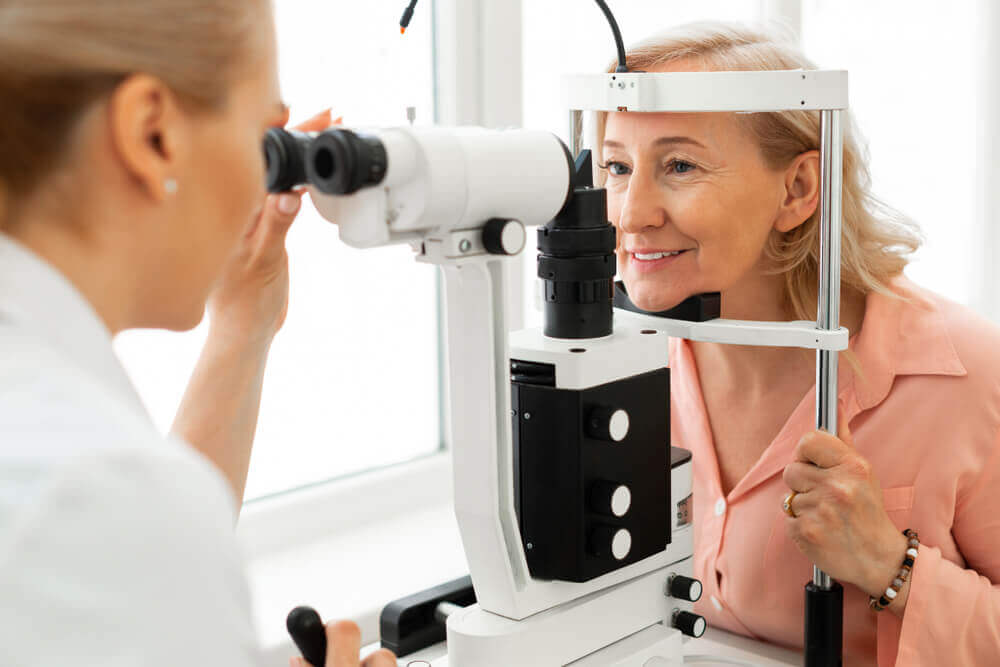
Various screening tests are offered by the optician. This means that the optician may not make a diagnosis, but can detect abnormalities that indicate an eye disease.
The optician can refer you to the ophthalmologist for any necessary diagnosis and treatment.
If the cataract progresses steadily and becomes massive, but remains untreated, it can lead to blindness. There are no medications to treat cataracts.
You can compensate for the loss of vision temporarily or even longer term with glasses or contact lenses. But the only and most effective treatment option is cataract surgery.
Cataract surgery is used to treat cataracts.
Whether and when cataracts need to be operated on with laser treatment depends very much on how much vision loss affects your life. If you suffer from another eye disease, this also plays a decisive role. These can influence the result of cataract surgery.
Overall, cataract surgery is a very effective method to improve visual acuity. This is a minor surgical procedure performed under local anesthesia. The surgeon uses the laser to make a small incision at the outer edge of the eye and an opening in the front part of the lens capsule.
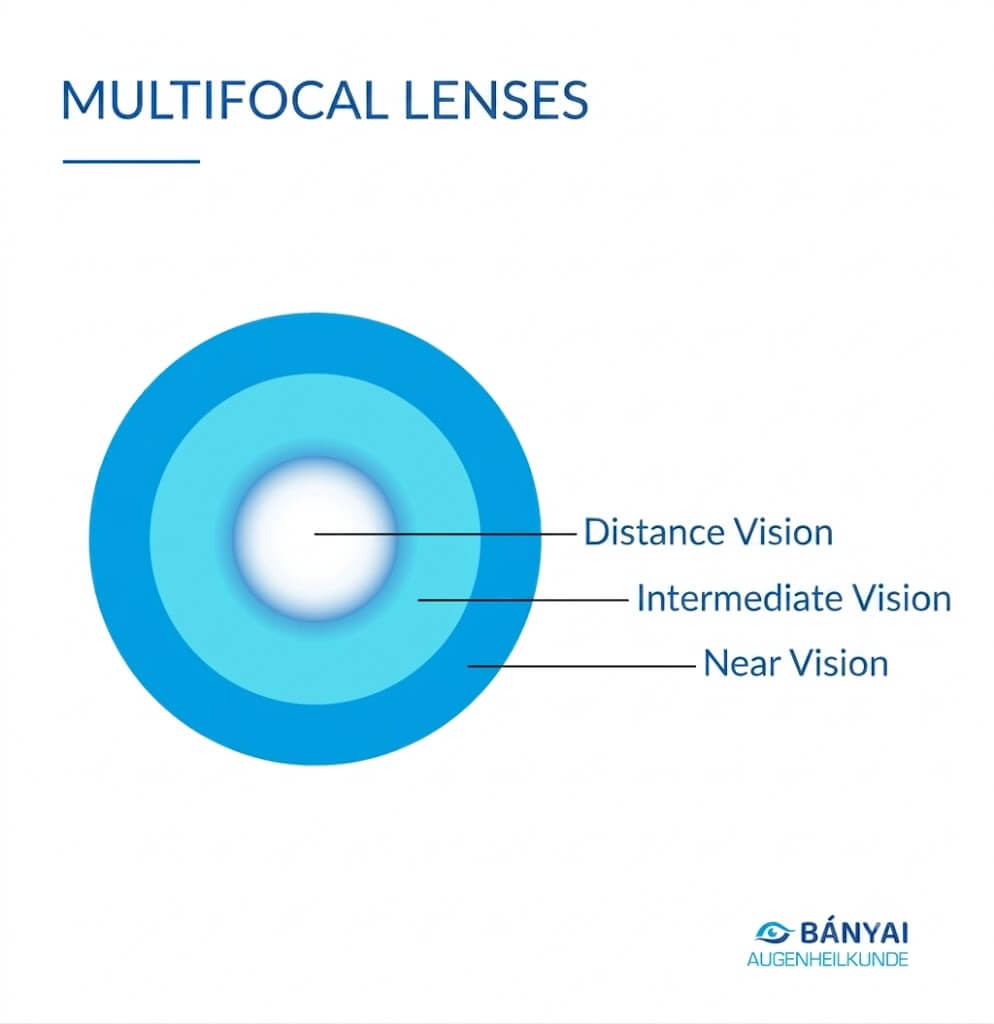
Then, in her eye operated in this way, the natural lens is replaced by an artificial lens (intraocular lens), either with monofocal lenses or the modern premium lenses, also called multifocal lenses.
Before the operation, you will discuss with Ms. Doctor-medic Bányai which types of lenses (multifocal lens, monofocal lens, lenses with extended focus, toric lenses, spherical lenses and aspherical lenses, lenses with UV filter and/or blue light filter) are suitable for you.
In addition, various refractive errors such as corneal curvature, nearsightedness, farsightedness or presbyopia can be positively influenced by cataract surgery by inserting or using specific lenses. The ophthalmologist will determine which artificial lens you are best suited for during the preliminary examination.
The ophthalmologist Mrs. Doctor-medic Bányai uses the Lensar laser as her surgical technique. State-of-the-art technology for a gentle cataract surgery. Many sufferers are afraid of the pain of cataract surgery, and we will be happy to advise you personally in our eye center.
The good news first: the cataract can usually be cured without any problems – by means of a simple and painless procedure with lasting results. However, it does not regress on its own and without treatment, the opacity of the lens usually increases and the visual impression worsens increasingly. In the worst case, this can lead to blindness.
The only effective treatment is cataract surgery. Laser cataract surgery is one of the most frequently performed procedures. In Germany alone, this operation is performed around 700,000 times a year.
Cataracts cloud your vision or the lens in your eye. It seems like the world around you is surrounded by a grayish milky veil. The vision of the eye becomes increasingly blurred.
The cataract alters the ability to perceive space. This can lead to blindness if they do not treat the cataract. Cataract is one of the most common causes of blindness worldwide.
For the most part, cataract is a sign of aging. Due to certain pre-existing diseases of the immune system such as diabetes or diseases of the eyes, cataracts can occur earlier.
Meanwhile, every second person between the ages of 52 and 64 is struggling with this disease. From the age of 65, more than 90% of those affected are already affected. Do you suffer from symptoms of cataracts? Book a personal consultation and examination at one of our eye centers. A doctor will provide you with competent advice. The examination on the eye will determine whether you are eligible for cataract surgery.
Yes. In most cases, the statutory health insurance covers cataract surgery, as this leads to a reduction in the quality of life. We also offer an option for financing.
Simply arrange a personal meeting with us. An examination will also take place as part of the conversation. Furthermore, we will inform you and answer all your questions about the topic and its treatment methods.
The cataract can lead to blindness. Therefore, cataract opacity should be treated or operated on. The cataract surgery takes less than 20 minutes and is performed with the LENSAR laser. For an accurate diagnosis and preliminary examination, simply book a personal consultation at one of our ophthalmologist practices. A doctor will provide you with competent advice.
The cataract cannot regress naturally. The cataract symptoms begin gradually and lead to blindness. Cataract surgery is the only solution. This operation is now a routine procedure and can be performed at any stage of the disease. After cataract surgery, the vision caused by the disease is corrected.
A multifocal lens has the decisive advantage that it works with several focal points. As a result, after lens implantation with multifocal lenses, patients usually no longer need any further visual aids at all distances. The power (refractive power) of this lens is calculated individually for you.
Rarely, an aftercataract can occur after a cataract operation. This leads to visual deterioration. Connective tissue and cell growths cloud the vision. This is due to the slight clouding of the capsule sac in which the lens was implanted.
The aftercataract can occur after months or years in the operated eye.
In such cases, further surgery of the eye is recommended. A small intervention so that their visual quality is fully restored.
In cataracts, the natural lens is replaced by a so-called “intraocular lens”. There are 2 types of “intraocular lenses”:
We mainly use the multifocal lens. Thanks to this modern type of lens, in addition to cataracts, another defective vision, namely presbyopia, can also be corrected.
Sunglasses are not necessarily necessary after cataract surgery, but you should definitely avoid direct sunlight. Immediately after the operation, your eye will be covered and protected. You can usually remove this “eye patch” after a few hours after the operation. Sunglasses are recommended if you go outside in the sunshine during the healing phase. For more details, please contact Ms. Doctor-medic Bányai.
Cataracts cannot be corrected with glasses. Medications also do not help with cataract disease. Cataract surgery is the only solution for cataract disease.
As a rule, severe nearsightedness can be corrected by multifocal lens implantation in cataract surgery. However, it should be noted that the higher the nearsightedness, the more contrast is lost by the multifocal lens. As a rule, this contrast difference is only noticeable above -12.00 diopters. Each patient is individual and multifocal lens implantation for further refractive errors carries risks, so an accurate diagnosis by ophthalmologist Ms. Doctor-medic Bányai is recommended.
