ONLINE LASER EYE TEST!
Wondering if you’re a good candidate for laser eye surgery? Take our online eligibility test now and find out your results in just a few clicks.

Multifocal lenses (also called multifocal intraocular lenses) are lens types that are modelled on the body’s own lens of the eye. These are usually used in the treatment of cataracts. If the patient is not suitable for laser treatment, it is advisable to use such a lens depending on the degree and type of refractive error.
These lenses differ in two other ways:
Each lens is unique due to its own capabilities and is used for various purposes.


ONLINE LASER EYE TEST!
Wondering if you’re a good candidate for laser eye surgery? Take our online eligibility test now and find out your results in just a few clicks.
If the patient suffers from severe refractive error or cataracts, a bifocal lens can be used. This shape of the lens has two refractive zones and therefore again allows good vision at different distances. Seeing in the distance and nearby becomes possible again.
The majority of patients go without glasses after the procedure. Nevertheless, it is recommended not to do without glasses when driving.
The trifocal lens is also used for severe refractive error or cataracts. The trifocal multifocal lens makes it possible to see the near range between 30 and 100 cm sharply again.
This area is particularly important when working on a computer or reading. When driving, glasses can be dispensed with here, in contrast to the bifocal lens, which requires glasses when driving.
This lens helps with any type of refractive error to some extent. Whether you suffer from severe nearsightedness, farsightedness or corneal curvature, it doesn’t matter – the multifocal lenses provide a remedy.
Even with cataracts, this type of treatment can solve the problem. All these procedures are performed by Ms. Doctor-medic Bányai personally.
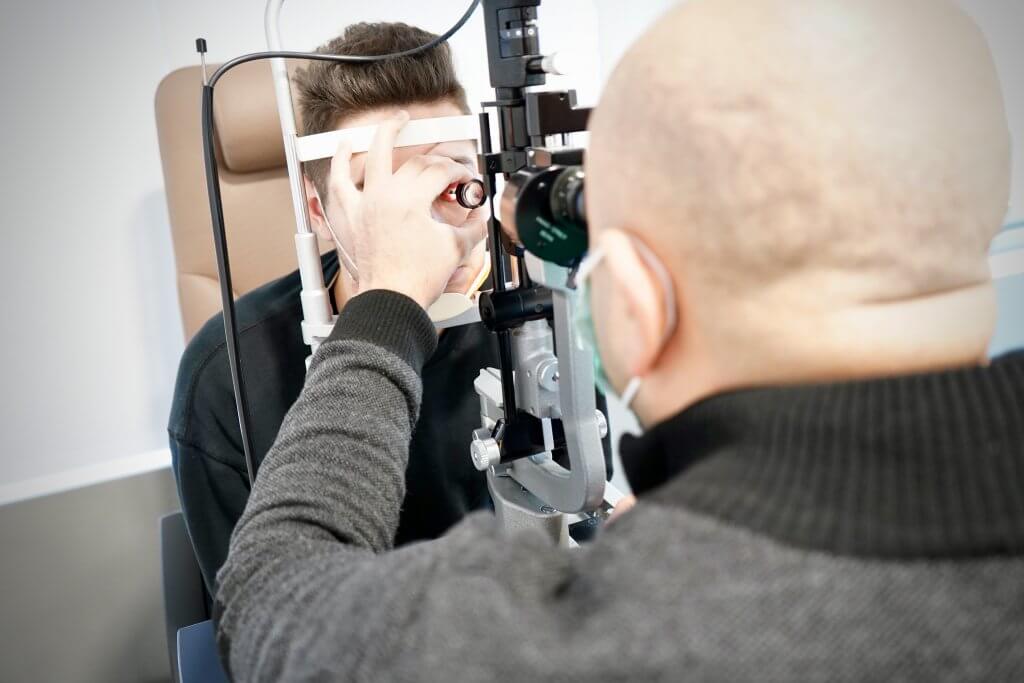

If you suffer from severe refractive error, you may not be suitable for laser. The alternative is to insert a multifocal lens. During a medical procedure, the lens of the eye is replaced with the new artificial lens.
This process will correct the refractive error. Depending on the lens, you can perceive the distant, the near, or both. The biggest advantage is that you cannot get a cataract after inserting a multifocal lens.
During insertion, an incision is made in the cornea using a laser. The body’s own lens is crushed by the laser or ultrasound and removed via the incision.
The new artificial lens is now also inserted over the incision. The procedure takes about 15 minutes per eye and is performed with a local anaesthetic.
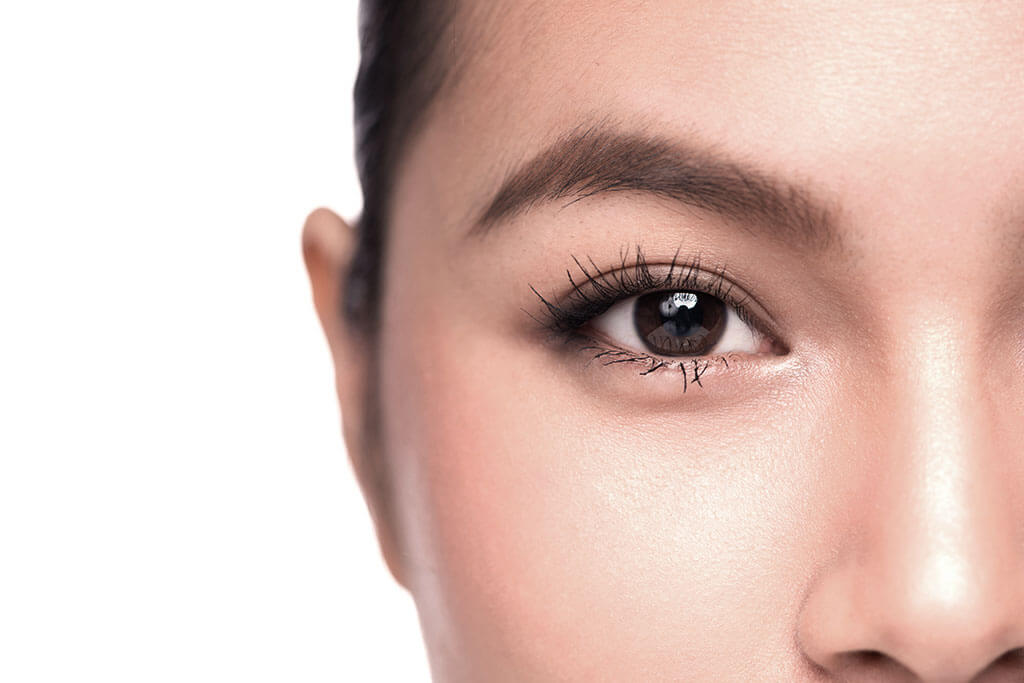

The healing time is on average between 3 and 7 days. During this time, you should use the eye drops prescribed by the doctor regularly, but only as long as prescribed.
These lenses last a lifetime and do not need to be removed or replaced.
The cost of a multifocal lens can vary depending on the nature of the eyes and which lens is needed.
To find out the exact price, you should arrange a personal appointment with us. This interview will include an examination and determination of the most suitable procedure for you, which will then also be used to determine the costs.

The statutory health insurance companies only take over such an intervention to a limited extent. If there is a defective vision like cataracts, the treatment is usually taken over by the health insurance company. In the case of defective vision such as farsightedness, it depends on the degree of impairment. You should therefore always clarify the financing with your bank yourself.
Otherwise, we also offer a financing option. In a personal consultation, you will learn everything you need to know about financing. Read general information about the eye!
Book your personal consultation online now—with no obligation!
Laser Eye Surgery, Diagnostics & Consultations on Ophthalmology at the Bányai Laser Eye Center – Dr. Liliana Bányai
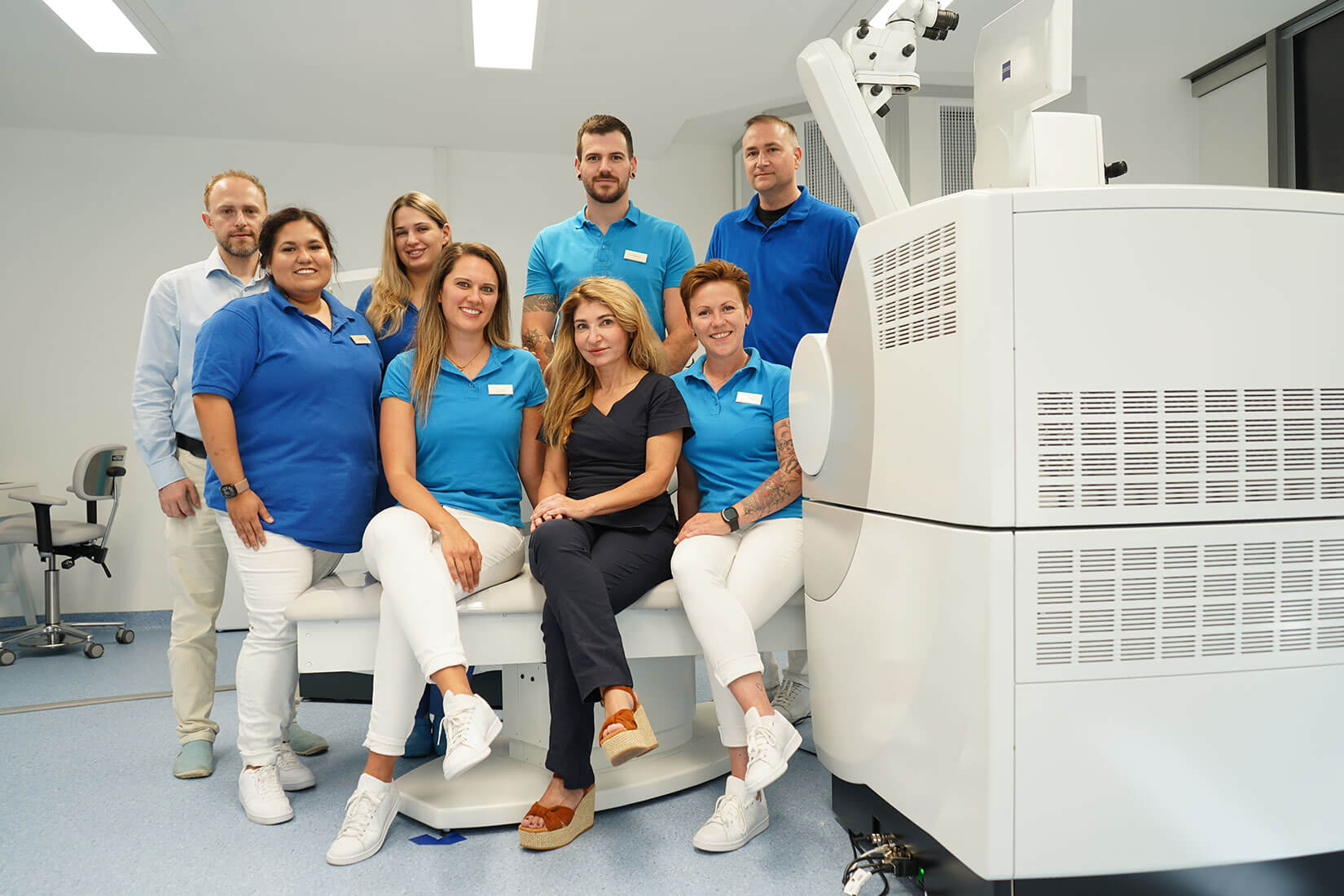
Yes and no. It can largely replace glasses, but that depends on whether you have inserted a tri- or bifocal lens. Bifocal lenses still require eyeglasses when driving, for example.
The answer to the question of which multifocal lens is best for you cannot be given in a general way. In order to find the best result for you, a close examination is required. Schedule a personal consultation. In the course of the conversation, we will examine you and find the best lens for your form of vision loss.