
The best” lens does not come in one package, it depends on your individual visual needs, your lifestyle and the condition of your eyes. For most panel patients, our standard aspherical lenses (Zeiss Asphina 409, Zeiss Lucia 621 or Alcon MA60AC) are an excellent choice, providing clear vision at no extra charge. If you have a corneal curvature at the same time or want to live as spectacle-free as possible, you can benefit from a premium lens. We will clarify together in a consultation which lens is right for you.
At Bányai, we only use high-quality aspherical lenses as standard lenses: the Zeiss Asphina 409, the Zeiss Lucia 621 and the Alcon MA60AC (sulcus lens). All three lenses are included in the statutory health insurance rate – without additional payment for panel patients.
Aspherical lenses have a more precise optical profile and can reduce spherical aberrations. This allows for clearer vision, especially in low light conditions. Spherical lenses cannot fully compensate for this optical error.
Premium lenses can be useful if you have a corneal curvature, want more freedom from glasses after surgery or have special requirements for your visual comfort. During the consultation, we will clarify together whether a premium lens is suitable for your situation.
Intraocular lenses are designed for lifetimes and usually do not need to be replaced. A follow-up operation is generally not planned. In rare cases, an aftercataract may occur. Read more – Indication of possible aftercataract.
Co-payments for premium lenses start at approx. €277.98 per eye (toric lenses) and range up to approx. €518.73 per eye (multifocal lenses). During the consultation, you will receive an exact cost overview for your individual situation.
Yes – the statutory health insurance covers the costs of standard lenses in full. At Bányai, you can get high-quality aspherical lenses at no extra charge.
The best” lens does not come in one package, it depends on your individual visual needs, your lifestyle and the condition of your eyes. For most panel patients, our standard aspherical lenses (Zeiss Asphina 409, Zeiss Lucia 621 or Alcon MA60AC) are an excellent choice, providing clear vision at no extra charge. If you have a corneal curvature at the same time or want to live as spectacle-free as possible, you can benefit from a premium lens. We will clarify together in a consultation which lens is right for you.
At Bányai, we only use high-quality aspherical lenses as standard lenses: the Zeiss Asphina 409, the Zeiss Lucia 621 and the Alcon MA60AC (sulcus lens). All three lenses are included in the statutory health insurance rate – without additional payment for panel patients.
Aspherical lenses have a more precise optical profile and can reduce spherical aberrations. This allows for clearer vision, especially in low light conditions. Spherical lenses cannot fully compensate for this optical error.
Premium lenses can be useful if you have a corneal curvature, want more freedom from glasses after surgery or have special requirements for your visual comfort. During the consultation, we will clarify together whether a premium lens is suitable for your situation.
Intraocular lenses are designed for lifetimes and usually do not need to be replaced. A follow-up operation is generally not planned. In rare cases, an aftercataract may occur. Read more – Indication of possible aftercataract.
Co-payments for premium lenses start at approx. €277.98 per eye (toric lenses) and range up to approx. €518.73 per eye (multifocal lenses). During the consultation, you will receive an exact cost overview for your individual situation.
Yes – the statutory health insurance covers the costs of standard lenses in full. At Bányai, you can get high-quality aspherical lenses at no extra charge.
The best” lens does not come in one package, it depends on your individual visual needs, your lifestyle and the condition of your eyes. For most panel patients, our standard aspherical lenses (Zeiss Asphina 409, Zeiss Lucia 621 or Alcon MA60AC) are an excellent choice, providing clear vision at no extra charge. If you have a corneal curvature at the same time or want to live as spectacle-free as possible, you can benefit from a premium lens. We will clarify together in a consultation which lens is right for you.
At Bányai Augenheilkunde, you will learn transparently which lenses are used in cataract surgery.
For panel patients, we only use aspherical high-quality lenses, with transparent prices.
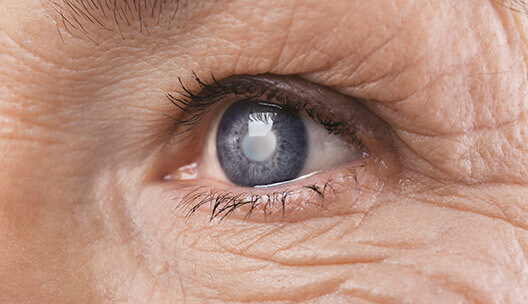
In cataracts, the clouded eye lens is replaced by an artificial intraocular lens (IOL). Which cataract lens is used during cataract surgery determines your visual quality in the long term and whether you still need glasses or contact lenses after the operation.
At Bányai Augenheilkunde, you can find out transparently which types of lenses we use and what the health insurance company reimburses.

Current media reports12 show: Some ophthalmologists market lenses of equal quality as “premium products” and demand additional payments, although the health insurance company bears the costs in full. Read more about cataract surgery costs in detail.
This is not the case with Bányai Augenheilkunde. We only use aspherical high-quality lenses for cash register patients and disclose which models we use.
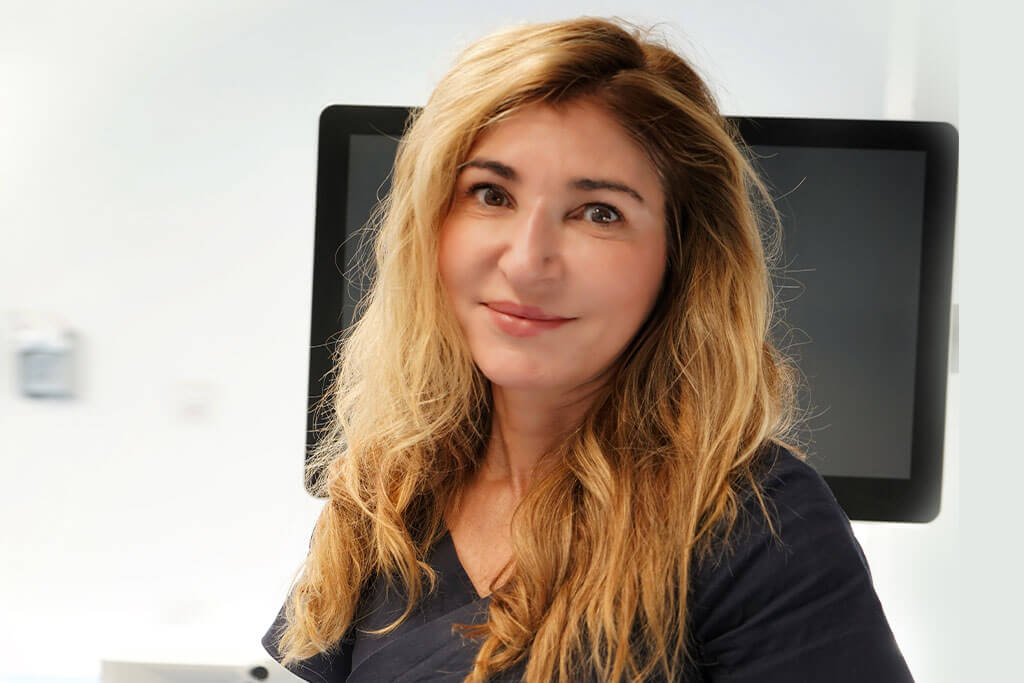
Doctor-medic Bányai is convinced: “Every patient has the right to honest information about the inserted lens.”
If the natural eye lens is clouded by cataracts and restricts vision, it is replaced by an artificial lens, called an intraocular lens (IOL) or artificial lens, as part of cataract surgery. The IOL takes over the refractive power of the natural eye lens and allows clear vision again.
Unlike glaucoma, which can be treated with eye drops, cataract surgery is the only effective therapy for cataracts. If left untreated, cataracts can lead to severe visual impairment and even blindness.
The inserted intraocular lens remains permanently in the eye. Different lens types differ in visual acuity, depth of field and the possibilities for correcting defective vision such as nearsightedness, farsightedness or corneal curvature.

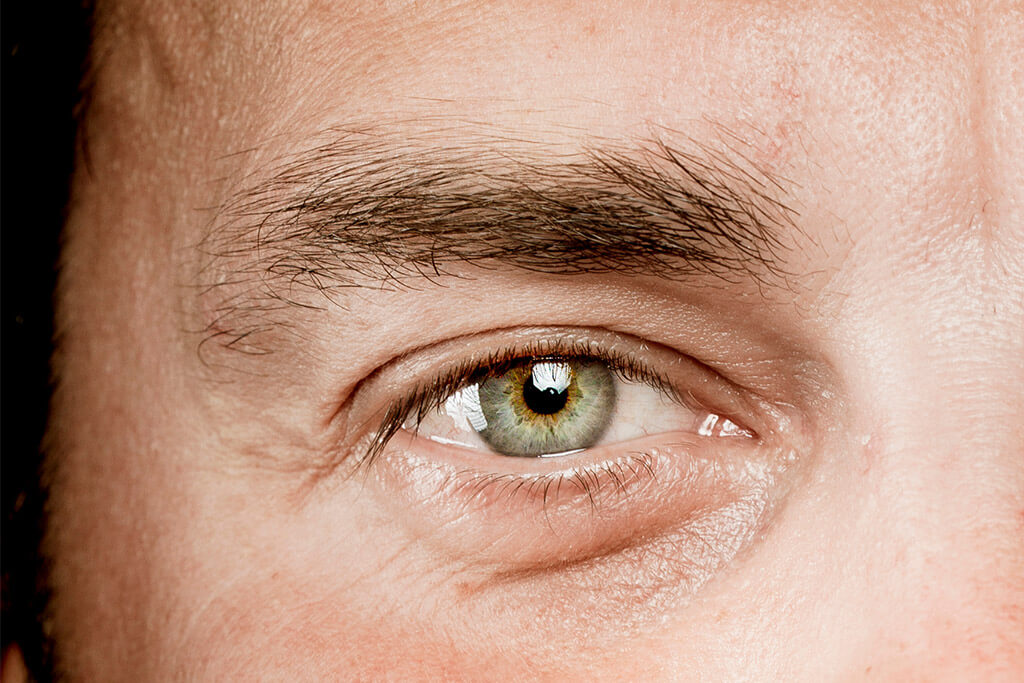
Depending on vision needs and eye structure, different types of lenses are used. The choice of artificial lens influences whether you still need reading glasses, progressive lenses or contact lenses after surgery.
Monofocal lenses are the classic standard lenses for cataract surgery and are fully covered by statutory health insurance. They correct a focal point, usually the distance.
Reading glasses are usually required for near and medium distances. Monofocal lenses are an excellent solution for most panel patients.
Toric lenses are specially designed for patients with corneal curvature (astigmatism). They correct both lens opacity and corneal curvature in a single procedure. They are offered as special lenses with additional payment.
Extended Depth of Focus (EDOF) lenses allow for an increased range of focus. Patients can see sharply in the distance and in the middle area (e.g. screen, dashboard). An example is the Alcon Vivity lens.
Multifocal lenses can cover distance, intermediate and proximity at the same time – for the best possible spectacle independence after surgery. Multifocal-toric combination lenses are available for patients with additional corneal curvature.


Not every standard lens is the same. There is a significant difference in quality between spherical and aspherical lenses:
Not every standard lens offers the same quality of vision. The decisive difference lies in the optical profile of the intraocular lens:
Spherical lenses produce optical errors (spherical aberrations) that impair contrast vision and visual acuity, especially during twilight and low-light conditions.
Aspherical lenses are made more precisely and can compensate for these errors. The result: better visual acuity, clearer contrast vision and higher visual quality in all light situations.
While aspherical lenses are offered at some practices as special lenses with an extra charge, they are a matter of course at Bányai.
We only use tested intraocular lenses from leading manufacturers such as Zeiss and Alcon:
| Lens | Manufacturer | Special feature |
|---|---|---|
| Asphina 409 | Carl Zeiss | Aspherical monofocal lens |
| Lucia 621 | Carl Zeiss | Aspherical, yellow-tinted (filters short-wave light) |
| MA60AC | Alcon | Aspherical sulcus lens |
1. Consultation and lens recommendation
We discuss your viewing habits, lifestyle and expectations. Based on your eye structure, we recommend the appropriate lens type, standard lens or premium lens.
2. Biometrics
Precise measurement and diagnosis of the eye to calculate the optimal refractive power of your new intraocular lens. State-of-the-art biometric devices ensure an accurate result and lay the foundation for clear vision after surgery.
3. Cataract surgery (phacoemulsification)
The clouded eye lens is crushed with ultrasound (phacoemulsification) and aspirated. The lens capsule remains intact and serves as a carrier for the new artificial lens. The procedure is outpatient, is performed under local anesthesia and usually takes 15 to 20 minutes. For certain indications, laser operations (e.g. FLACS femtosecond lasers) can also increase precision.
4. Aftercare
Regular checks after surgery ensure the best possible result. Eye drops support the healing process in the first few weeks.
Doctor-medic Bányai is an ophthalmologist and performs cataract operations at four locations in the Stuttgart area.
She attaches particular importance to transparent patient education and the highest quality standards in lens selection.
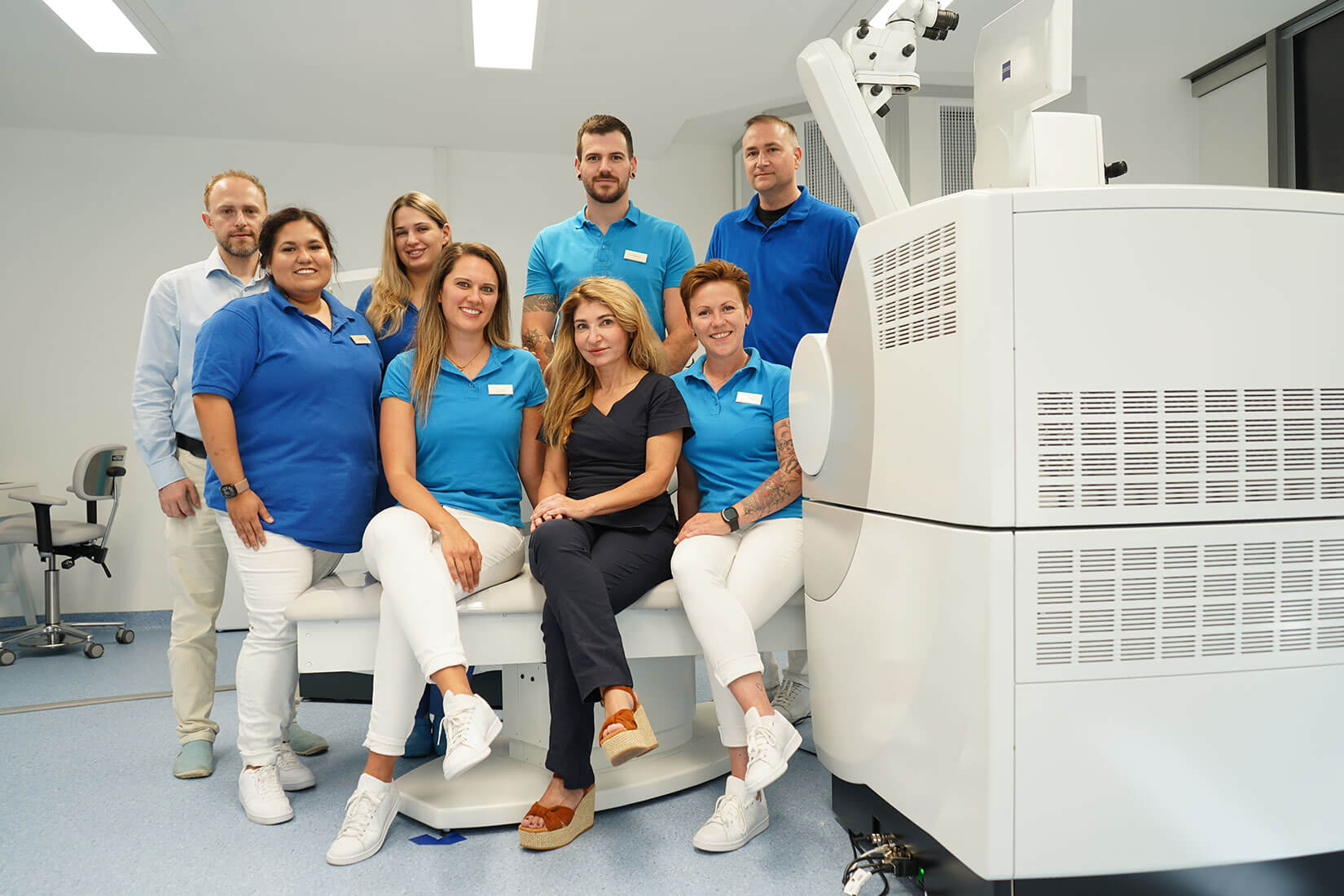
Simply arrange a non-binding and personal consultation with us. An examination will also take place as part of the conversation. We will advise you on which cataract lens is suitable for you. You will also receive details on the cost of the lenses and cataract surgery.
At Bányai, we only use high-quality aspherical lenses as standard lenses: the Zeiss Asphina 409, the Zeiss Lucia 621 and the Alcon MA60AC (sulcus lens). All three lenses are included in the statutory health insurance rate – without additional payment for panel patients.
Aspherical lenses have a more precise optical profile and can reduce spherical aberrations. This allows for clearer vision, especially in low light conditions. Spherical lenses cannot fully compensate for this optical error.
Premium lenses can be useful if you have a corneal curvature, want more freedom from glasses after surgery or have special requirements for your visual comfort. During the consultation, we will clarify together whether a premium lens is suitable for your situation.
Intraocular lenses are designed for lifetimes and usually do not need to be replaced. A follow-up operation is generally not planned. In rare cases, an aftercataract may occur. Read more – Indication of possible aftercataract.
Co-payments for premium lenses start at approx. €277.98 per eye (toric lenses) and range up to approx. €518.73 per eye (multifocal lenses). During the consultation, you will receive an exact cost overview for your individual situation.
Yes – the statutory health insurance covers the costs of standard lenses in full. At Bányai, you can get high-quality aspherical lenses at no extra charge.
The best” lens does not come in one package, it depends on your individual visual needs, your lifestyle and the condition of your eyes. For most panel patients, our standard aspherical lenses (Zeiss Asphina 409, Zeiss Lucia 621 or Alcon MA60AC) are an excellent choice, providing clear vision at no extra charge. If you have a corneal curvature at the same time or want to live as spectacle-free as possible, you can benefit from a premium lens. We will clarify together in a consultation which lens is right for you.


