

An acute glaucoma attack is an ophthalmic emergency that must be recognized and treated immediately. The optic nerve can be permanently damaged in a very short time.
However, many patients do not know what to look for or how such an episode manifests.
In this post, as an ophthalmologist, I will show you how to accurately assess symptoms, when you need to act immediately, and why every minute counts.
An acute angle closure glaucoma – also called acute angle-closure glaucoma – occurs when the eye’s drainage angle suddenly becomes blocked, preventing the aqueous humor from draining.
This causes intraocular pressure to rise rapidly. If left untreated, irreversible optic nerve damage and permanent vision loss can occur within hours.
This form is far less common than chronic open-angle glaucoma, but it is all the more dangerous.
Typically, individuals with a narrow anterior chamber angle are affected — the eye is anatomically configured so that the outflow of aqueous humor can become blocked under certain conditions (e.g., pupil dilation). This leads to a sudden rise in pressure, which places a severe strain on the eye.
A glaucoma attack usually comes on suddenly and is very intense. Key warning signs include:
These symptoms typically occur in the evening or in darkness, when the pupils dilate and further narrow the anterior chamber angle.
Stress, pupil-dilating medications, antidepressants, or certain painkillers can also trigger an attack.
Important: Symptoms are often so intense that patients are more likely to suspect migraine or a neurological disorder.

This is exactly where the danger lies – because without an ophthalmological examination, a glaucoma attack often goes unnoticed. The Bányai Augenheilkunde team is trained to recognize such emergencies quickly and to respond appropriately.
If there is any suspicion, seek immediate ophthalmological or emergency medical care! Every minute without treatment increases the risk of permanent damage.
The first phase of acute treatment focuses on rapidly reducing intraocular pressure.
Specific pressure-lowering eye drops, such as beta-blockers or prostaglandin analogues, are used for this purpose. At the same time, systemically acting medications such as acetazolamide (Diamox) or glycerol are often administered.
In severe cases, infusion therapy may also be necessary to rapidly reduce intraocular pressure.
Once the pressure is controlled, definitive treatment is typically provided promptly—most often with a laser procedure.
The so-called YAG iridotomy is the standard procedure: a fine laser incision in the iris creates a new connection between the anterior and posterior chambers. This allows the aqueous humor to circulate freely again, which significantly reduces the risk of another attack.
In some cases—especially if a lens opacity (cataract) is already present—cataract surgery may also be indicated. Replacing the natural lens with an artificial one not only improves vision but also permanently widens the anterior chamber angle and stabilizes intraocular pressure.
These procedures are part of the range of treatments at Bányai Augenheilkunde and are always individually tailored to each patient’s anatomical characteristics and risk factors.
There is an increased risk of:
A screening with a slit-lamp examination and gonioscopy (assessment of the anterior chamber angle) can help identify at-risk individuals early.
In ophthalmology (eye care), assessing the risk associated with narrow anterior chamber angles is part of glaucoma screening.
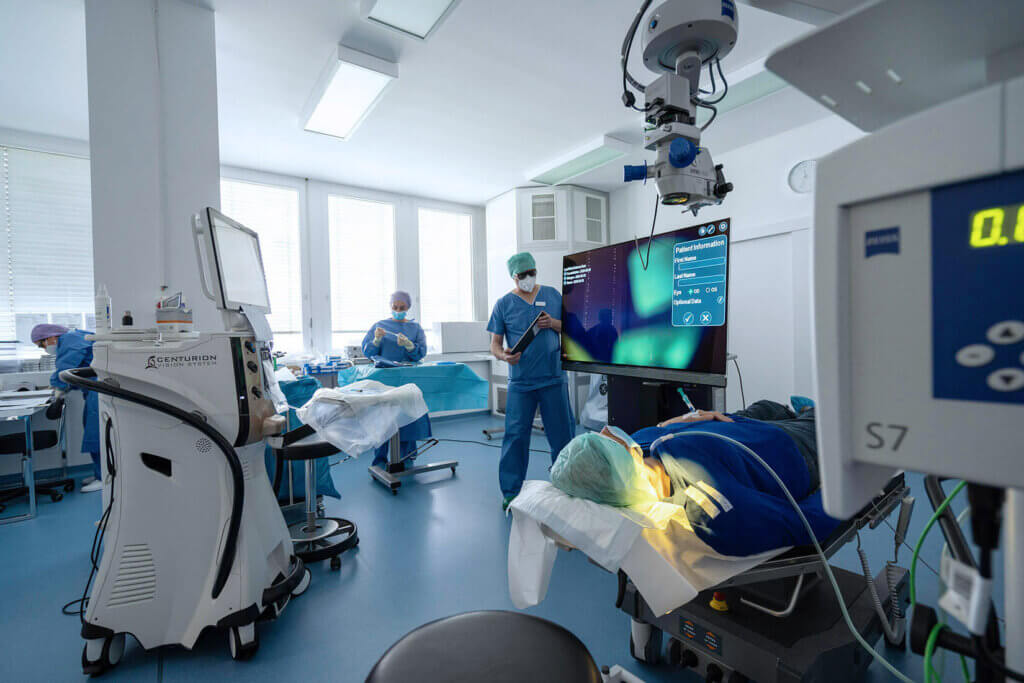
People with a narrow anterior chamber angle or other risk factors should be examined regularly by an ophthalmologist.
Even in the presence of atypical anatomy, a prophylactic laser iridotomy may be indicated. Early cataract surgery can also be preventive.
In addition, medications that dilate the pupil (e.g., during examinations or when taking certain medications) should be used only with caution and under the supervision of an ophthalmologist. Anyone affected should seek immediate medical attention if they experience any new symptoms.
An acute glaucoma attack can permanently damage the eye within a few hours. It is therefore crucial to act promptly and take early symptoms seriously.
If you are in a risk group or experience any of the signs mentioned, do not hesitate. Even after an episode has passed, close follow-up is necessary to protect the other eye and prevent a recurrence.
Bányai Augenheilkunde also provides long-term care for patients with structured follow-up examinations and state-of-the-art diagnostic procedures.
An acute glaucoma attack is an ophthalmic emergency that requires prompt action. The symptoms are usually clear – but they must be recognized as such.
If you know what to look for, you can respond appropriately in an emergency and protect your vision. If you have risk factors, have them assessed early by an ophthalmologist — it’s the only way to prevent emergencies.
Read our article on normal-tension glaucoma to better understand other forms of glaucoma.
Bányai Augenheilkunde is an experienced partner for all questions regarding glaucoma diagnostics, emergency care, glaucoma symptoms, glaucoma surgery, and other ophthalmology concerns.
Yes — severe pain and a feeling of pressure in the eye are typical warning signs.
No. If left untreated, the condition worsens rapidly and leads to permanent damage.
Initially treated with medication, then usually by creating a laser opening in the iris. Bányai Augenheilkunde applies both procedures, tailored to the individual.
Yes, through ophthalmological check-ups, especially for high-risk patients, and, if necessary, prophylactic laser treatment.
At first, usually only one eye is affected. However, in the long term, the other eye is also at increased risk.
Hat Ihnen dieser Beitrag gefallen? Teilen Sie ihn mit anderen!