
Early detection and the prevention of vision loss — this is the most important principle in glaucoma. Because the disease usually begins gradually and causes no pain in its early stages, it often goes unnoticed for a long time.
In this article, we explain when a glaucoma examination is truly worthwhile, which risk factors matter, and what a thorough diagnostic assessment looks like.
Ophthalmologists recommend that an initial glaucoma screening take place no later than age 40—even if there are no symptoms.
This is exactly what makes glaucoma so dangerous: it causes no pain in its early stages and is therefore often detected too late.
However, if you have certain risk factors, you should begin regular check-ups much earlier. Pay particular attention to family history—for example, if your parents or siblings have glaucoma.
Chronic conditions such as diabetes, high blood pressure, or migraines can impair blood flow to the optic nerve and increase the risk. Caution is also warranted in cases of severe short- or long-sightedness, prior eye injuries, eye surgery, or long-term cortisone therapy.
In such cases, it may be advisable to begin preventive care as early as age 30, or even earlier. At Bányai Augenheilkunde, we offer personalized advice based on your health profile.
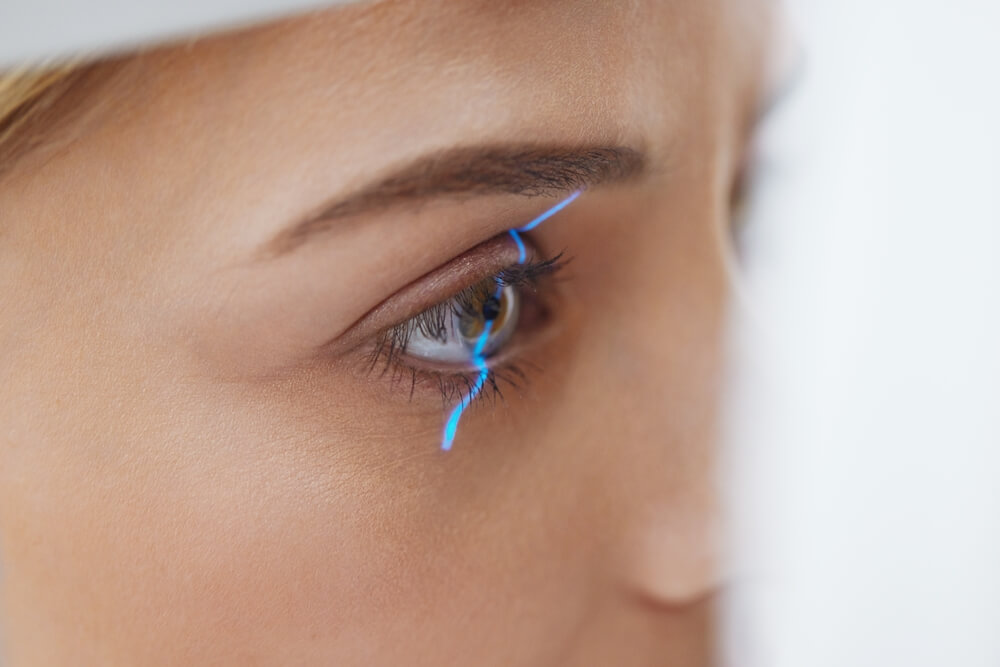
A reliable glaucoma diagnosis does not rely on a single measurement. It is based on a combination of different examinations that together provide a complete picture:
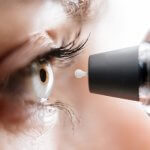
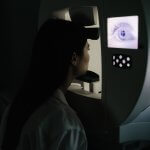
First, intraocular pressure is measured (tonometry). However, this value alone is not sufficient to rule out glaucoma. That is why we also analyze the structure of the optic nerve using OCT (optical coherence tomography) — subtle changes in the nerve fiber layer can be detected even before visual field defects appear.
Perimetry is also an important component: it reveals whether there are already limitations in the visual field—often unnoticed by those affected.
The examination is supplemented by an evaluation of the optic nerve head (optic disc) at the fundus and, if necessary, by measurement of corneal thickness (pachymetry), as this can affect the measured intraocular pressure.
This multidimensional diagnostic approach enables us to detect early-stage glaucoma — long before irreversible damage occurs.

Glaucoma is an insidious disease: it develops slowly, often over years, and remains painless — which distinguishes glaucoma from cataract, since the latter is usually detected early and can be treated effectively.
Many patients only notice any impairment once the optic nerve is already significantly damaged. A preventive examination can halt this gradual process at an early stage.
The earlier an elevated intraocular pressure or a change in the optic nerve is detected, the easier and more successful the treatment will be.
At Bányai Augenheilkunde, we offer a wide range of modern therapeutic options – from pressure-lowering eye drops and gentle laser treatments such as selective laser trabeculoplasty (SLT) to microsurgical procedures.
In certain cases, concomitant cataract surgery can also help lower pressure — replacing the natural lens improves aqueous humor outflow and can thus lead to a sustained reduction in intraocular pressure.
Our treatment decision is always based on the individual findings and on your personal risk profile.
In many cases, medication in the form of eye drops is sufficient to stabilize the pressure. If the condition progresses further, modern laser treatments or surgical procedures are available.
However, it’s important to remember that every month counts to avoid permanent damage.
Not sure whether glaucoma screening is relevant for you? This checklist can help. It shows at a glance whether an eye examination is advisable — even if you have no acute symptoms:
If any of these apply to you, you should consider a glaucoma examination.
In several cases, we recommend scheduling an appointment with an ophthalmologist as soon as possible.
Glaucoma can be effectively treated today, provided the condition is detected early. At Bányai Augenheilkunde, we offer a range of modern therapeutic procedures, including surgery for glaucoma or cataract, as well as medical treatments such as eye drops that are individually tailored to the specific stage of glaucoma.
A glaucoma examination from the age of 40 — or earlier if at increased risk — is not merely a precautionary measure but an important part of proactive health protection. Those who attend regular screenings not only protect their eyesight but also gain clarity and reassurance.
At Bányai Augenheilkunde, we support you with state-of-the-art technology, personalized recommendations, and a focused approach to your personal eye health.
As a rule, from age 40 – considerably earlier if there are risk factors such as a family history.
No. Opticians generally do not measure optic nerve structures or visual fields – that requires an ophthalmological examination.
Not always. A so-called normal-tension glaucoma can occur even with normal eye pressure — the overall clinical picture is decisive.
This is followed by further diagnostic steps, e.g., follow-up monitoring, additional OCT scans, or, if necessary, initiation of therapy with eye drops.
Very rare, but possible – for example with congenital glaucoma or following injuries. Early assessment is crucial.
Hat Ihnen dieser Beitrag gefallen? Teilen Sie ihn mit anderen!