More and more people worldwide are affected by visual impairment, but it is also possible to take precautions against visual impairment. Visual impairments include nearsightedness, farsightedness, presbyopia and the like. All visual impairments lead, as the name suggests, to poorer vision. There are various reasons for the diminishing ability to see, for example UV light, smoking, increasing age or an unhealthy diet that is too one-sided.
However, the good thing is that vision can often be improved with little effort and visual impairments are reduced. Vitamins for the eyes and a balanced diet with lots of fruits and vegetables are the secret recipe for good vision. However, if you already suffer from low vision, we advise you to have laser eye surgery with us at the eye laser center in Leonberg.
Of course, a visual impairment of the eyes can also be temporarily corrected with glasses or contact lenses. However, it should be noted that aids such as glasses or contact lenses are only temporarily effective against visual impairments. This means that if your diopter values of visual impairment change, a new pair of glasses or new contact lenses must also be used against visual impairment.
In the case of visual impairment of the eyes, due to a change in the structure of the eye, the incident light no longer hits the retina properly. Depending on the type of visual impairment, it is no longer possible to see clearly. Distant or even near objects can no longer be seen clearly with the naked eye due to visual impairment. Glasses or contact lenses can help to compensate for such visual impairments.
The eye is in constant exchange with the body, even in the case of visual impairment, and is supplied with blood like all other organs. Nutrients and vitamins also get into the eyes. If the diet is not balanced enough or is characterized by unhealthy food, an excessively high dose of slags comes to the eye with the nutrients, which can lead to poor vision. Slags are waste products that are produced during the daily metabolism and can lead to poor vision. Normally, they are excreted from the body, but if they are too large, the intestine, liver and kidney are overwhelmed.
The excess slag eventually settles in the eyes, lens, retina and eye muscles. Visual impairment can occur. As a result, vision deteriorates and visual impairment can occur. So you should not only pay attention to a balanced diet, but also to a vitamin-containing one to prevent visual impairment. Important vitamins for the eyes are, for example, vitamin C, vitamin A, vitamin E and vitamin B2 can prevent vision impairment. Glasses and contact lenses can help compensate for a visual impairment, but only temporarily.
Selenium and zinc as well as the carotenoids lutein and zeaxanthin can also be included more often in your food to counteract visual impairment. Vitamins that are good for the eye are often found in various fruits and vegetables. For example, spinach, tomatoes, broccoli, mangoes and carrots contain a lot of beta-carotene, which the body converts into vitamin A and help the eye not to develop poor vision. In addition, spinach – and other green vegetables such as kale and peas – also contain lutein and zeaxanthin. Citrus fruits, on the other hand, help the eyes with vitamins C and B. These can help the eye prevent poor vision.
A visual impairment is an impairment of vision. People who are farsighted or short-sighted, for example. There are various visual impairments that can be distinguished:
In the case of visual impairments such as nearsightedness and farsightedness, the eye is shaped differently than in people without visual impairment. Such visual impairments as nearsightedness, farsightedness and corneal curvature are diagnosed and treated by ophthalmologists or opticians. Glasses or contact lenses are temporary solutions, but they need to be replaced after some time. If you want to permanently correct a visual impairment such as nearsightedness, farsightedness or even a corneal curvature, laser eye surgery is recommended.
Since different trace elements and vitamins have different effects on the eyes, it is not enough to only take certain types of vitamins. Instead, the variety of vitamins is important for healthy eyes, which can be obtained with a balanced, varied diet and prevents poor vision.
For example, vitamin A helps against night blindness and visual impairment of the eyes, and vitamins B2, C and E protect against cell damage. The trace elements selenium and zinc are also directly involved in vision. Carotenoids such as lutein and zeaxanthin, on the other hand, protect against harmful blue light. In addition, almost all of these trace elements and vitamins have an antioxidant effect on the eyes. The more different vitamins a person absorbs for the eye, the more he supports the performance of his eyes and thus his own vision. The susceptibility to visual impairment decreases.
When it comes to nutrition and poor eyesight, it is important to mention first and foremost that a healthy and balanced diet is important for healthy eyes, but does not always protect against developing poor eyesight. A visual impairment is usually understood to mean farsightedness or nearsightedness. Therefore, you should see an optician or ophthalmologist at least once a year. Regular inspection and monitoring of your eyes is the best protection against visual impairments such as nearsightedness or farsightedness. An optician or ophthalmologist can already observe and detect the slightest changes in the eye. The ophthalmologist can help you immediately in case of visual impairment and act early enough.
In addition, the diet, no matter how good, cannot protect visual impairments such as: cataract, glaucoma. These visual impairments are opacities of the lens that make it very difficult to see with the naked eye. From the age of 40, it is advisable not to miss the annual appointment with an ophthalmologist or optician due to such eye diseases and visual impairments.
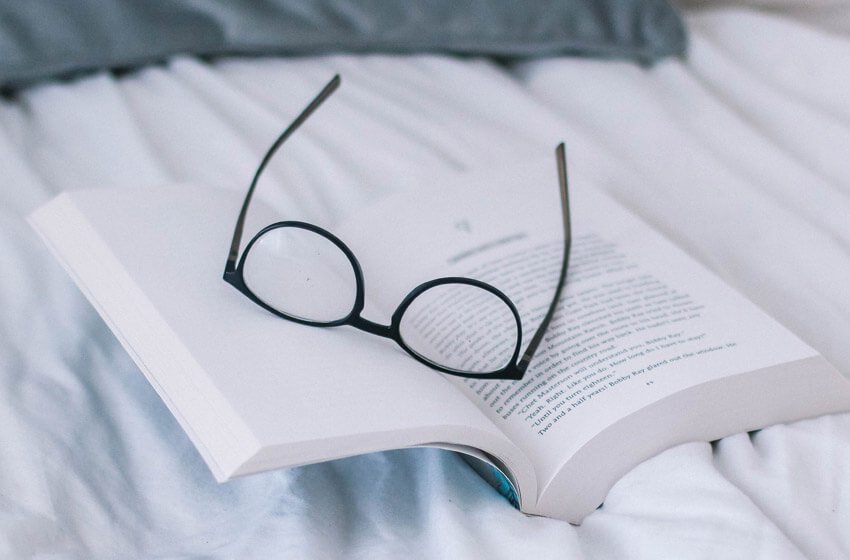
Vitamins play an important role for the eyes and potential visual impairments, especially in old age, because they support the functioning of the macula and such visual impairments are less common. The macula is the place on the retina where the focused light collects and only when it is intact can the human being see well with the eye. However, since most light, and thus the highest proportion of harmful blue light, strikes the macula, it loses parts of its functionality over the course of its life. Vision impairment can be the result for the eye.
In addition, especially in old age, the carotenoids lutein and zeaxanthin, which are important for the macula, decrease in their concentration, which further increases the natural wear of the macula. This is called age-related macular degeneration (AMD).
Here, too, a balanced supply of nutrients and vitamins for the eyes helps. Especially green vegetables with lutein and zeaxanthin are good, because the carotenoids filter the harmful blue light. Regardless of your vitamin intake, however, you should consult an ophthalmologist as soon as possible if there are signs of macular degeneration (AMD).
As soon as macular degeneration (AMD) – or other visual impairments such as nearsightedness/farsightedness – are in an advanced stage of development, vitamins for the eyes can unfortunately no longer help. However, the right vitamins for the eyes are always a good way to prevent or reduce visual impairments. And the rest of the body is also happy about the nutrients in order to be prepared against visual impairment.
The Moches Volantes are also known as flying mosquitoes. These flying mosquitoes express themselves as small shadows or irregular lines when they see. The trigger here is a clouding of the vitreous body in the eye. A healthy diet can prevent such ailments from occurring, but is no guarantee that you will never be affected.
Therefore, the appointment with the ophthalmologist or optician should be made once a year. This can immediately perceive and interpret any changes in the eye and vision. It is possible for the ophthalmologist and optician to initiate ways to remedy the problem.
Short-sightedness is a visual impairment that makes it almost impossible for the naked eye to see distant things clearly. In this case, the incident light from the lens of the eye is focused too much. Therefore, the light does not impinge on the retina, but bundles just before the retina. For a permanent solution, it is advisable to have myopia lasered.
Far-sightedness is a visual impairment in which nearby objects are difficult for the eye to focus on. The lens does not refract the light strongly enough and it does not focus on the retina, but behind the retina. The light on the retina is not a point, but arrives as a surface.
Glasses and contact lenses can help to compensate for such visual impairments. The lens is simulated and lets the light fall properly on the retina. For a permanent solution, you can have your farsightedness lasered
Glasses and contact lenses do not help with every visual impairment. However, glasses and contact lenses help with visual impairments such as: nearsightedness, farsightedness or a corneal curvature. Other visual impairments such as cataracts or cataracts cannot be compensated for. This visual impairment affects the eye in another form. Here, only surgery or, as with cataracts, drug treatment helps.
However, when it comes to the visual impairments of farsightedness, nearsightedness and corneal curvature, the optician or ophthalmologist can help with glasses or contact lenses. These compensate for the curvature of the lens in the eye and make it possible to see clearly again. However, it should be added here that the number of diopters can change. As a result, a new pair of glasses or contact lens is also required.
In order to combat visual impairment such as nearsightedness or farsightedness, glasses or contact lenses are only a temporary solution. In order to be permanently free from nearsightedness or farsightedness, it is advisable to have your eyes lasered. We will be happy to inform you in full in a personal consultation.
Hat Ihnen dieser Beitrag gefallen? Teilen Sie ihn mit anderen!