The ‘green star’ (glaucoma) is one of the most common causes of gradual vision loss in ophthalmology and should not be confused with cataracts. The difference between green and grey cataracts is that the ‘green star’, despite its similar name, is usually detected relatively late.
The eye disease is usually caused by increased intraocular pressure (measured in mmHg, i.e., millimeters of mercury), which, over time, leads to unnoticed damage to the optic nerve.
However, glaucoma can also develop at normal intraocular pressure, as in normal-tension glaucoma, which is caused by impaired blood flow to the optic nerve head.
In any case, early detection is essential to preserve vision.
In ophthalmology, glaucoma is one of the most common optic nerve diseases, but it is often diagnosed late.
While an acute glaucoma attack—with sudden symptoms such as severe eye pain or headaches—is immediately recognised as an emergency, the chronic form usually develops insidiously and can remain unnoticed for a long time.
Because symptoms often don’t appear until an advanced stage, early detection is crucial. Therefore, watch for these 10 warning signs — they can provide important clues to early-stage glaucoma.
A gradual loss of visual field is one of the most common symptoms of chronic glaucoma. At first, those affected hardly notice anything, but over time it becomes apparent that objects at the edge of their visual field are no longer perceived.
You bump into door frames more often, fail to see pedestrians, or feel unsafe while driving. These visual field defects are insidious because central vision often remains intact for a long time.
An early eye examination, such as a visual field test, can reveal these losses before significant damage occurs.
This symptom is typical of an acute glaucoma attack or narrow-angle glaucoma. The colored rings are caused by corneal edema resulting from a markedly increased intraocular pressure.
Those affected often describe the phenomenon as shimmering or multicoloured rings around bright light sources that do not change with movement. These halos occur because the swollen cornea scatters incoming light — a sign of a serious disturbance of the eye’s pressure regulation.
If additional symptoms such as eye pain, nausea, red eyes, or vomiting occur, this is an ophthalmic emergency. In such cases, every minute counts: an untreated glaucoma attack can lead to permanent optic nerve damage in a very short time.
But even in less severe cases — such as intermittently elevated intraocular pressure — seeing halos can be a sign of an early-stage disease. Therefore, any unusual visual perception should be examined by a doctor.

Fluctuating intraocular pressure, which for many people is highest in the morning, may present as recurrent blurred vision.
Especially when glancing at the clock in the morning or when reading, the blurriness becomes noticeable. This may indicate impaired drainage of the aqueous humor and should be taken seriously.
The aqueous humor regulates pressure in the eye’s anterior chamber. Impaired drainage can lead to long-term damage to the optic nerve.
Even if your vision stabilizes again during the day, an eye examination is advisable to rule out or confirm glaucoma at an early stage.
Eye or forehead pain with nausea. Severe pain around the eye, often on one side, combined with nausea or vomiting, is a typical sign of an acute glaucoma attack.
This is caused by an abrupt increase in intraocular pressure — for example, a sudden closure of the anterior chamber angle.
The pain can radiate to the forehead or the ear and is often accompanied by a feeling of tension or a stabbing pressure in the eye.
This is a medical emergency that requires immediate ophthalmological care to prevent permanent damage to the optic nerve.
Problems with vision at dusk or in poor light. Glaucoma initially affects peripheral vision — the outer part of the visual field.
This is particularly important for orientation in low light. Anyone who feels increasingly unsure when walking at dusk, frequently stumbles over objects, or has difficulty finding their way around in dark environments should have this checked by an ophthalmologist.
Such symptoms often go unnoticed but become increasingly noticeable as glaucoma progresses.
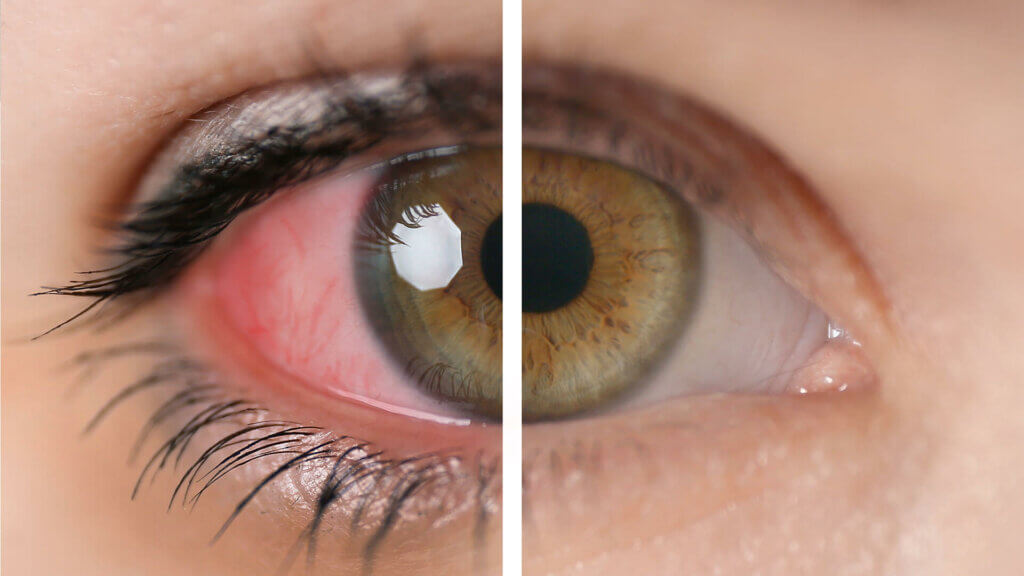
Increased sensitivity to light—such as when reading under direct light or in sunlight—can be an indirect sign of a change in intraocular pressure.
When accompanied by red eyes, a burning sensation, or a dull feeling of pressure, it could indicate a pressure spike or the onset of an inflammatory reaction.
These symptoms should not be mistaken for a harmless conjunctival irritation. An eye examination is strongly recommended, especially in patients with a known diagnosis of glaucoma.
Abrupt vision loss in one eye – with no apparent external cause – may indicate advanced glaucoma or secondary glaucoma resulting from another eye disease – for example after injury, surgery, or cortisone therapy.
Even if the loss is only temporary, it must be taken seriously. This is particularly dangerous for patients who already have impairment in one eye, since their remaining vision may be acutely at risk.
A prompt ophthalmological evaluation is essential to rule out causes such as glaucoma or to ensure timely treatment.
Those affected sometimes report that colours appear paler, or that they have more difficulty perceiving contrasts, for example between black and white.
These symptoms result from the gradual damage to the nerve fibers that transmit visual information to the brain. This damage impairs the processing of visual stimuli.
Such changes develop gradually and are often noticeable only when compared directly with the other eye or under certain lighting conditions.
Repeated eye redness or sensation of pressure Chronic or recurrent eye redness, accompanied by an unpleasant sensation of pressure, can indicate a sustained increase in intraocular pressure — even if there is no pain.
In certain types of glaucoma, such as pseudoexfoliation glaucoma or secondary glaucoma, these symptoms often occur.
Again, if you regularly experience a sensation of tension or irritation, don’t simply attribute it to dry eyes or screen use; have it evaluated in an ophthalmological examination.
One very important risk factor is a family history of glaucoma. If parents, siblings, or grandparents have glaucoma, your own risk is significantly increased—even without noticeable symptoms.
Because glaucoma often runs in families, we recommend regular eye examinations, especially for first-degree relatives. Early diagnosis allows even minor changes to be detected and appropriate measures to be taken.
Many of the symptoms of glaucoma are initially nonspecific or are underestimated. With glaucoma, the earlier the disease is detected, the more effectively its progression can be halted and valuable vision preserved.
At Bányai Augenheilkunde, we use modern diagnostics such as tonometry (measurement of intraocular pressure), OCT (optical coherence tomography) to analyze the nerve fibers and the optic nerve head, and visual field analysis (perimetry) to reliably detect glaucoma and provide individualized treatment.

The aim of the treatment is to permanently lower intraocular pressure—usually with medicated eye drops, gentle laser treatments such as SLT (Selective Laser Trabeculoplasty), or surgical interventions (e.g., trabeculectomy).
In some cases, accompanying cataract surgery can also help reduce pressure. We determine the most suitable therapy on an individual basis, taking into account the type of glaucoma, its course, and the patient’s risk profile.
Depending on the type of glaucoma – open-angle glaucoma, angle-closure glaucoma, normal-tension glaucoma, or secondary glaucoma – treatment is determined on an individual basis.
At Bányai Augenheilkunde, we use modern diagnostic methods such as tonometry (intraocular pressure measurement), OCT (optical coherence tomography), and visual field testing to reliably detect glaucoma and provide individualized treatment.
Yes – especially in the early stages, chronic glaucoma is often asymptomatic. Therefore, regular eye examinations from the age of 40 are crucial, even if there are no visual disturbances.
From age 40 at the latest – earlier if there is a family history or other risk factors such as diabetes or severe short-sightedness. The most important examinations are tonometry, OCT and a visual field test.
Glaucoma is not curable, but it can be treated effectively. The aim is to stop the progression and preserve the existing vision for as long as possible.
Yes, although it is less common. There are juvenile forms of glaucoma as well as secondary glaucomas after injury or other eye diseases.
Depending on the severity and stability: Usually every 3 to 6 months. The intervals are individually determined by your ophthalmologist.
Hat Ihnen dieser Beitrag gefallen? Teilen Sie ihn mit anderen!