For glaucoma, eye drops are often the first and most important measure to lower intraocular pressure. But even the best therapy does little good if it is not applied correctly in everyday life.
Small errors when administering drops can reduce their effectiveness or even cause side effects.
In this post, I’ll show you seven common mistakes people make when using glaucoma drops — and how you can easily avoid them. That way, you’ll get the best possible results from your treatment and protect your vision in the long term.
Drop therapy is only effective if used regularly and correctly. Many glaucoma medications must be instilled into the eye in precise doses and at specific times of day to achieve their full effect.
If the drop is not applied correctly, the active ingredient cannot reach the intended site — the chamber angle. As a result, the intraocular pressure remains too high, and the optic nerve remains at risk.
In addition, incorrect use can increase the risk of side effects such as irritation, inflammation, dry eyes, or even systemic effects if too much of the active ingredient enters the body through the tear ducts.
With lifelong therapy, it is crucial that the drops are used routinely, hygienically, and correctly.
Irregular use is one of the most common reasons for inadequate reduction of intraocular pressure.
Especially when used once or several times a day, it’s important to stick to the schedule. If a dose is missed—for example because of an irregular daily routine, travel, or distraction—the effect may diminish.
Our tip: Use reminder functions on your phone, add your eye drop times to your calendar, or link the application to established daily routines — e.g., brushing your teeth.
Accurate eye-drop instillation is challenging, especially for older patients or those with motor impairments. The drop often lands on the cheek or eyelid rather than in the conjunctival sac.
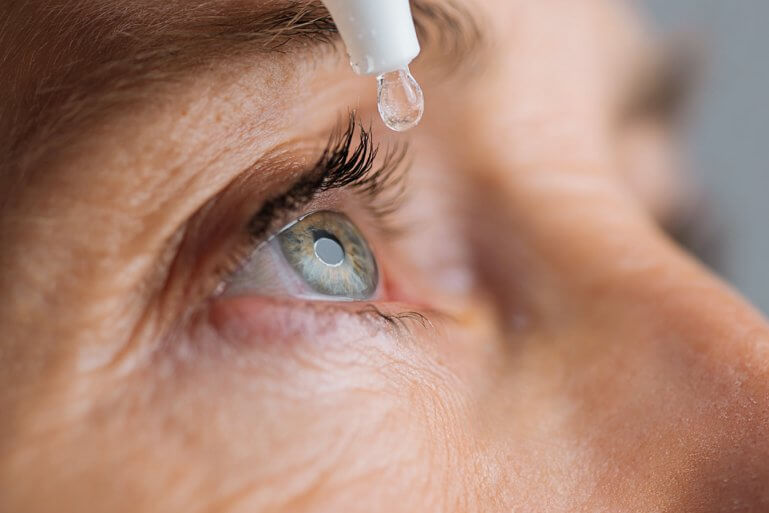
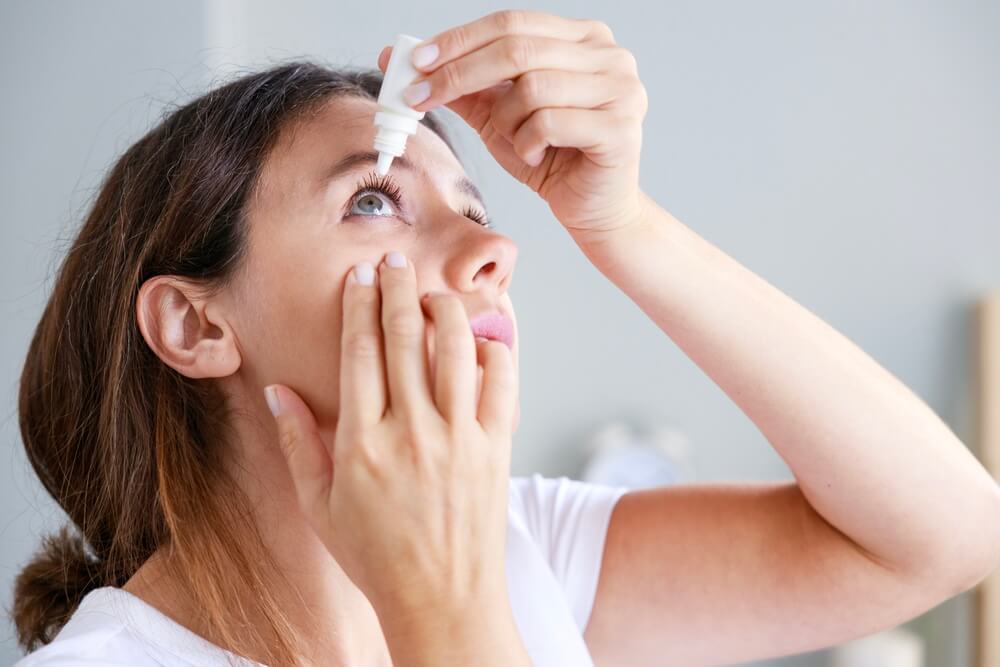
This is the correct way: Tilt your head back slightly, gently pull down your lower eyelid, and hold the bottle vertically over your eye. Try to drop the solution into the center of the eye and avoid bringing the bottle too close to the eye.
“‘More is better’ doesn’t apply to eye drops. Overuse can irritate the eyes or cause unwanted side effects.”
It’s particularly dangerous to self-administer additional drops if you’re unsure whether the drop actually reached the eye.
Our advice: Only use the drops at the frequency recommended by your ophthalmologist — as a rule, one drop per eye per application is sufficient.
A common mistake: blinking immediately after instilling the drop or opening the eye wide. The drop then does not spread properly and may drain into the tear duct, where it can no longer be effective.
The solution: Close your eye gently and keep it closed for about 1–2 minutes without squeezing. Additionally, you can gently press the inner corner of the eye with one finger to block drainage through the tear duct.
If the dropper tip touches the skin, eyelashes, or the eye, germs can be introduced into the bottle. This increases the risk of infection, particularly for people with sensitive eyes.
Important: Make sure the dropper tip never touches anything. Close the bottle immediately after use and store it as instructed – some preparations must be kept cool or used promptly after opening.
If you use multiple eye drops, you should pay attention to the order and the intervals between them. If two preparations are instilled immediately one after the other, they may dilute or displace one another.
Our tip: Wait at least 5 minutes between different eye drops. Begin with the medication that acts more quickly or the one that has been specifically prescribed. Your treatment team will be happy to explain which order is advisable.
Eye redness, itching, burning, or a “foreign body sensation” are often dismissed as normal, even though there are now many well‑tolerated treatments available.
Especially with preservative-free drops, the strain on the eye is significantly reduced.
Therefore, report any abnormalities, even if they seem harmless. There are often alternatives that are equally effective and better tolerated.
Eye drops are only effective if used correctly. Even small adjustments in technique, order, or hygiene can be crucial for lowering intraocular pressure and protecting the optic nerve.
At Bányai Augenheilkunde, we take the time to explain the eye-drop technique in detail, including as part of training or when monitoring its use.
This is how we help you carry out your therapy safely in everyday life and avoid common mistakes. After all, every correctly applied drop counts – for your vision today and tomorrow.
Only at intervals – wait at least 5 minutes between different preparations.
Take it as soon as possible, but do not take a double dose.
Yes – e.g., preservative-free preparations, especially for sensitive eyes.
This can only be assessed through regular pressure measurements by your ophthalmologist.
Only if the packaging recommends it – otherwise, room temperature is sufficient.
Hat Ihnen dieser Beitrag gefallen? Teilen Sie ihn mit anderen!