Glaucoma is one of the most common causes of gradual vision loss in older adults, yet it is still surrounded by many half-truths and misconceptions.
Precisely because the disease often begins without being noticed, a solid understanding of it is essential. Dr. Daniel Bányai debunks five common misconceptions and explains what really matters when it comes to prevention and treatment.
This is one of the most dangerous misconceptions. In most cases, glaucoma does not cause any pain—especially when it is what is known as primary chronic open-angle glaucoma.
This condition develops slowly over the course of several years and often goes unnoticed for a long time. Damage to the optic nerve usually begins at the edge of the visual field and is compensated for by the brain for a long time.
Only in the case of an acute glaucoma attack—a rare but dangerous form of the disease—do sudden, severe pain, red eyes, and vision loss occur.
Tip:
Get regular checkups even if you have no symptoms—especially starting at age 40.
Many people rely on their visual acuity as a measure of eye health. However, glaucoma usually begins with loss of peripheral vision, not with blurred vision.
People with this condition have sharp vision, but they don’t realize that they are already missing information at the edges of their field of vision.
This insidious progression is treacherous: if glaucoma is not detected until damage to the optic nerve is already well advanced, the lost vision cannot be restored.
Tip:
Only modern diagnostic methods—such as high-resolution OCT (optical coherence tomography), precise visual field analyses, and examination of the optic nerve head—can detect early-stage damage in a timely manner.
At Bányai Augenheilkunde, we rely on precisely these technologies to detect changes early and tailor our approach to each patient.
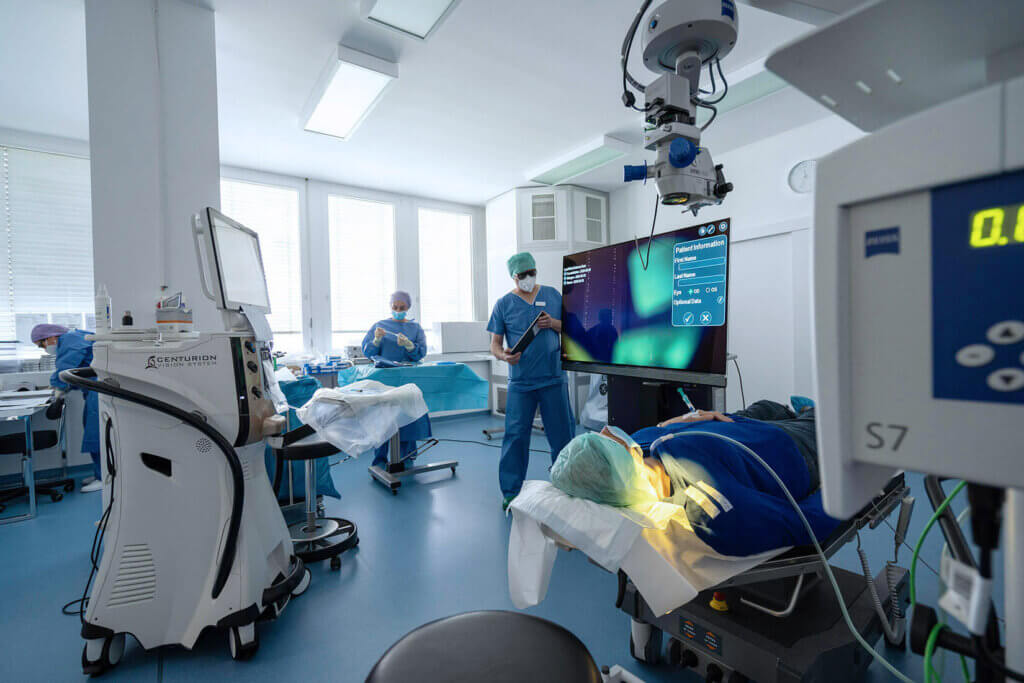
A common misconception. Glaucoma is a chronic condition and cannot be cured; nerve fibers that have already been damaged are lost permanently. The goal of any treatment is therefore to halt the progression of the disease, not to reverse it.
The good news: There are effective treatment options. In addition to eye drops and laser therapies , cataract surgery is a particularly effective treatment, including for lowering intraocular pressure in cases of glaucoma.
It is the treatment of choice today for many patients with both glaucoma and cataracts
Tip:
Consider cataract surgery early on—even if you’re just beginning to notice cloudiness in your lens.
At Bányai Augenheilkunde, we offer customized lens solutions—including high-quality multifocal lenses that provide sharp vision at both near and far distances. This is combined with modern surgical techniques and a comprehensive consultation.
It is true that the risk of glaucoma increases with age—especially after age 40. However, there are also many younger people affected. People with the following conditions are particularly at risk:
In addition, eye injuries or long-term corticosteroid treatments can also increase the risk. Although glaucoma is less common in children and adolescents, it can, for example, be present from birth (congenital glaucoma).
Tip:
At Bányai Augenheilkunde, we also provide personalized consultations for younger patients with risk factors—based on modern imaging and thorough diagnostics. After all, preventive care doesn’t start only in old age, but exactly when it’s needed.
This assumption is often misleading. While elevated intraocular pressure is a major risk factor, it is by no means the only one.
In so-called normal-tension glaucoma, the pressure is within the normal range, yet damage to the optic nerve still occurs.
The causes here are often circulatory problems or increased sensitivity of the optic nerve.
Therefore, it is not just intraocular pressure that is crucial, but rather the evaluation of the optic nerve in combination with other findings—such as visual field testing or OCT.
Tip:
Don’t rely solely on the “intraocular pressure reading”—comprehensive glaucoma screening is essential.
At Bányai Augenheilkunde, we combine various modern techniques: optical coherence tomography (OCT) to assess the nerve fiber layer, and visual field testing (perimetry) to detect functional deficits.
Many misconceptions about glaucoma can be quickly cleared up—if you know what’s important.
At Bányai Augenheilkunde, we’re here to support you with state-of-the-art diagnostics, years of experience, and personalized care. The most important thing to remember: Early detection is the key to preserving your vision in the long term.
Our advice: Don’t wait for symptoms to appear. Schedule a preventive care appointment at Bányai Augenheilkunde as soon as possible—we’ll support you with our expertise, experience, and empathy.
As a general rule, we recommend having your first glaucoma screening starting at age 40—or even earlier if you have risk factors (e.g., a family history of glaucoma, severe nearsightedness). Depending on your individual situation, we recommend follow-up exams every one to two years.
Statutory health insurance generally covers glaucoma screening only if there is a specific suspicion of the condition or if the patient already has the disease. Many preventive services—such as OCT examinations—are classified as so-called individual health services (IGeL). We’d be happy to provide you with transparent advice on all your options.
Complete protection is not possible, but the risk can be significantly reduced through regular checkups, maintaining stable blood pressure, avoiding eye trauma, and refraining from unnecessary use of corticosteroids. A healthy lifestyle also supports eye health.
Treatment varies from person to person, depending on the type of glaucoma and its progression. It usually begins with eye drops that lower intraocular pressure. In certain cases, laser treatments or surgical procedures, such as combined cataract surgery, are used. The goal is always to protect the optic nerve and halt the progression of the disease.
As long as vision—particularly the visual field—is sufficiently preserved, driving is generally permitted. It is important to have regular eye exams. In cases of advanced disease or visual field limitations, a driver’s fitness to drive may need to be reassessed.
Hat Ihnen dieser Beitrag gefallen? Teilen Sie ihn mit anderen!