
After cataract surgery, you should refrain from certain activities. The recovery period is about two weeks. To ensure your healing proceeds without complications, you should follow a few important guidelines. These include avoiding lifting heavy objects, not rubbing the eye even if it itches, and keeping soap and water out of the eye. Important: Be sure to attend all follow-up appointments!
In this article you will find tips and information on the following topics:
Lens implantation during cataract surgery is now a routine procedure and is associated with very few complications. The information below will help you prepare for cataract surgery and, in particular, for the recovery afterward.
After cataract surgery, you will experience little disruption to your daily routine. The operated eye will initially be protected by a dressing or an eye patch. Because the other eye now takes over all visual functions, you will be able to see, although your surroundings may be somewhat restricted.
Driving is prohibited immediately after cataract surgery. Therefore you must not drive. This means you should arrange for someone to accompany you or use alternative means of transport to get home after the operation. You must not participate in road traffic. This driving ban also applies after a secondary cataract operation. In general, you can drive again two days after the operation. If your vision has not improved after two days, consult your doctor or discuss it at your follow-up appointment.
To prevent aftereffects, avoid heavy lifting or bending over. In principle, anything that doesn’t physically strain you is permitted. This means you should avoid screen work and gardening after cataract surgery, but you can apply mascara again a few days later or visit the hairdresser, as long as these activities don’t strain you and you take care to protect your eyes.
You can shower immediately after the surgery, but take care that no soap or water gets into your eye. For this reason, sauna visits and swimming are not recommended.
In general, cataract treatment, in which the cloudy lens is removed, is straightforward and easily managed even by older adults. Near and distance vision are improved, and your quality of life is enhanced!
The cataract treatment is carefully planned during an initial consultation and a preliminary examination. Your eye will be measured to calculate the correct lens. The lens must be well adapted to the eye and have the correct strength (refractive power).
During this consultation, ophthalmologist Ms Doctor-medic Bányai will discuss in detail which lens is suitable for you and will also explain the cataract surgery procedure.
Before the actual procedure in which a lens implant (multifocal lens) is inserted, the anaesthetist numbs the eye with drops. This provides local anaesthesia. A general anaesthetic is usually not necessary. Through a small incision, the anterior chamber of the eye is opened and the clouded lens is removed using ultrasound. The clear artificial lens is then placed into the empty lens capsule. The incision used to access the interior of the eye is not stitched, as it is shaped so that it closes by itself. These incisions also do not cause corneal astigmatism, which positively affects visual quality after surgery.
At Bányai Augenheilkunde, cataract surgery is performed with the LENSAR Laser. Laser surgery is gentler and safer than making an incision with a scalpel.
Read more about the procedure for cataract surgery.
The operation itself usually takes about 15 to 20 minutes. Afterwards, you will recover at the practice or eye clinic for about half an hour, and then your companion will take you home. In the next few days, you should avoid strenuous physical activity and refrain from heavy lifting.
Read more about the duration of cataract surgery.
For your comfort, wear comfortable clothing on the day of your cataract surgery. Please avoid wearing eye makeup on the day of the operation. Take your usual medications as normal. If you take blood pressure–lowering medication, consult your doctor or ophthalmologist Doctor-medic Liliana-Iulia Bányai beforehand.
In modern times, cataract surgery is performed so frequently that it has become routine, including at our ophthalmology practice and cataract surgery centre in Stuttgart. It is considered one of the most successful operations and is completely safe. Cataract surgery is also not painful.
The success, which results in an improvement in vision of approximately 95 percent, justifies the procedure and the recommendation to undergo it. A well-coordinated team of nurses or medical assistants, an anaesthetist and the operating surgeon will give you reassurance and ensure a smooth, completely painless procedure.
Cataracts: When to operate at the latest? Cataract symptoms begin gradually and worsen over time. Therefore, the timing of cataract surgery depends on how much your vision and daily life are affected. If left untreated, cataracts can lead to blindness. Cataract surgery is now a routine procedure and can generally be performed at any time.
You will still have slightly blurry vision in the first few days after the procedure. However, this improves noticeably, and after about 14 days you will have clear vision again. You may feel as if there is a foreign body, like a grain of sand, in your eye.
Avoid rubbing or wiping the treated eye. This sensation is normal and should disappear after a few days. Slightly swollen eyes are rare but not a cause for concern.
Final visual acuity after cataract surgery is typically restored within six to eight weeks. At regular, short intervals, the ophthalmologist checks the eye and confirms that the artificial lens is properly positioned. After about six to eight weeks, when the eye has completely stabilized, have it checked to see whether low-diopter glasses are necessary for watching TV or reading. For normal vision, glasses are usually not required.
Your visual acuity will be reduced for a few days after surgery. You can read after the operation, but you should rest your eyes for a few days to avoid interfering with the healing process following cataract surgery. Working at a screen will be more difficult due to the reduced visual acuity and should therefore be avoided during this time. Normally, you will be given 14 days’ sick leave after cataract surgery. During this period, you should also give your eyes the rest they need.
A few days after cataract surgery, you may attend your hairdressing appointment. However, make sure the operated eye does not come into contact with water during the first three weeks. Also, avoid getting dust, hair, or other irritating particles in the eye to prevent inflammation and irritation. Ideally, schedule your hairdressing appointment for three weeks after your cataract surgery.
After cataract surgery, alcohol consumption and smoking are discouraged. Alcohol and smoking can negatively affect the healing process after eye surgery. Can’t live without alcohol or cigarettes? Then it’s important to seek professional help and advice. Please be sure to raise any concerns during your consultation.
The doctor will again prescribe antibiotic eye drops to keep the eye moist and to prevent inflammation. The drops are used four times a day at the start, then reduced to twice a day toward the end, and finally to once a day, over a period of about 21 days.
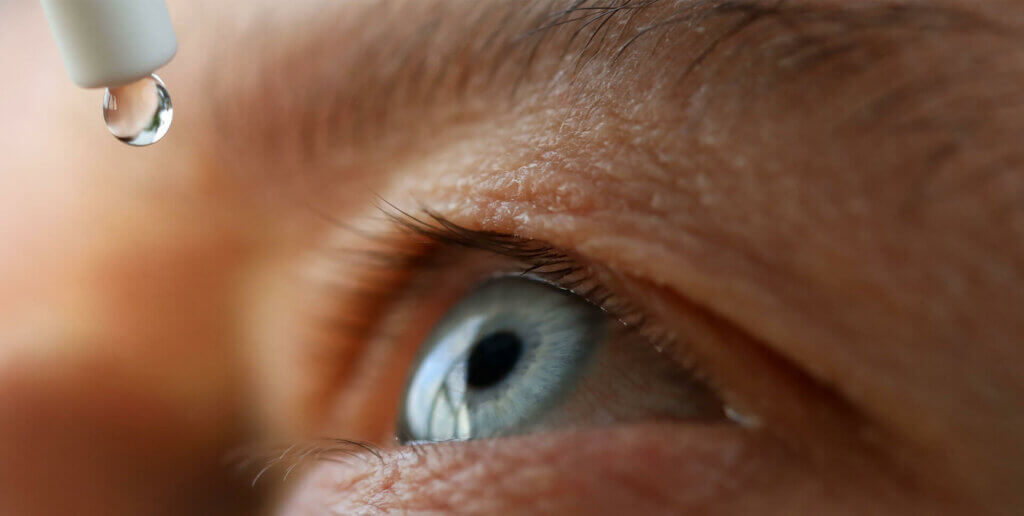
On the day after the operation—and sometimes even on the same day—the dressing or eye patch is removed.
What problems can occur after cataract surgery? A possible side effect after implantation of an artificial lens is the so-called “secondary cataract” — a slight clouding of the capsular bag — but this is easy and quick to treat.
Hat Ihnen dieser Beitrag gefallen? Teilen Sie ihn mit anderen!