

A cataract is a clouding of the eye’s lens that develops with age. In the early stages, a milky film may sometimes be noticed, impairing vision. Over time, the cataract can worsen and further impair vision.
In this article, we will address when cataracts should be operated on at the latest. We will also cover the symptoms of cataracts, the risk factors, and the different types of surgery.
The decision about when to perform cataract surgery is always made on an individual basis. In most cases, cataract surgery is recommended when the cataract impairs vision and interferes with the patient’s daily life.
However, it is important to note that there is no strict timeframe during which cataract surgery must be performed.
The decision to undergo surgery depends on several factors, including the degree of visual impairment, the symptoms, and the patient’s overall health. The cataract surgical aptitude test can help determine whether surgery is advisable.
In some cases, surgery may be necessary if a cataract significantly impairs vision. This is the case when the patient can no longer manage everyday tasks. For example, driving or reading may become difficult. If a cataract is left untreated, it can lead to progressive vision loss and ultimately to blindness.
In some cases, surgery may be recommended to lower the risk of further eye disease. If a cataract increases the risk of glaucoma or other eye diseases, surgery may be considered.
It is important that the patient and the ophthalmologist decide on the operation together. The ophthalmologist can determine the severity of the cataract and assess which treatment is required — although surgery will eventually be unavoidable. The patient should also take their own symptoms and concerns into account and be involved in the decision. Under no circumstances do you have to be afraid of cataract surgery.
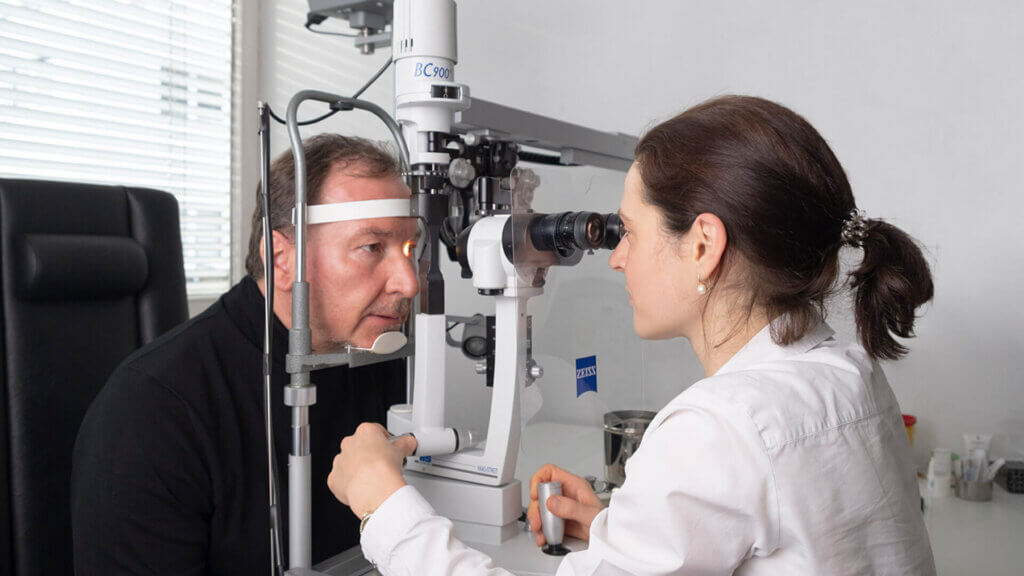
In any case, the patient should make sure they are fully informed about the surgery and understand its risks and benefits.
Cataract surgery at one of our three operating sites (Stuttgart, Leonberg, Böblingen) with Doctor-medic Bányai is safe and has a high success rate. However, as with any surgery, there is always some risk of complications. Therefore, it is important that the patient asks any questions they have and takes sufficient time to decide whether to proceed with surgery.
There are different types of cataract surgery available for treatment. One of the most common surgical techniques is phacoemulsification. In this procedure, the eye’s natural lens is removed through a tiny incision and replaced with an artificial lens. The operation is performed manually, with the incisions created using a microkeratome. This surgery is usually carried out on an outpatient basis and has a high success rate.
Another type of surgery is extracapsular cataract extraction (ECCE). In this procedure, the eye’s lens is removed through a larger incision. Nowadays, it is only rarely used and is reserved for very advanced cataracts.
Cataract surgery using the Lensar Laser is a modern, minimally invasive method for treating cataracts. A laser is used to create access to the lens and remove the cataract. Unlike traditional techniques, it is gentler and more precise, resulting in a shorter recovery time and better outcomes.
Lensar laser cataract surgery is a four-step procedure. First, 3D scanning technology is used to assess the exact condition of the eye. Next, the laser is used to create access to the lens. Then the cloudy lens is removed and replaced with a clear lens. Finally, the eye is covered with a protective cap to guard against infection.
A major advantage of cataract surgery using the Lensar laser is that it is minimally invasive. This means it requires only a small incision in the eye, resulting in less pain and a shorter recovery time. In addition, the method is more precise than conventional techniques: the laser determines the exact size and position of the access to the lens, leading to better results.
Cataracts are a common age-related condition that mainly affects older adults. They occur when the eye’s natural lens becomes cloudy. The lens is normally clear and flexible, helping to focus light rays to form sharp images on the retina.
However, if the proteins in the lens condense over time, they can cause clouding that impairs vision and disrupts the eye’s ability to form clear images.
The symptoms of cataracts can vary from person to person. Some people may not experience any symptoms, while others may notice impaired vision. The most common symptoms of cataracts include:
Several factors can increase the risk of developing cataracts. These include:
Cataracts are a common age-related change in the eye’s lens that can impair vision. There are different types of surgery to treat cataracts, but there is no fixed timeframe in which they must be performed.
The decision to undergo surgery depends on various factors, such as the degree of visual impairment, the symptoms, and the patient’s overall health. It is important that the patient and the ophthalmologist make this decision together and that the patient is fully informed about the surgery. In addition, annual cataract screening is recommended from the age of 50.
You are welcome to schedule an appointment with an ophthalmologist in Stuttgart or at one of our other locations in the Stuttgart area. For more information about cataract surgery costs, see our article on cataract surgery costs.
Hat Ihnen dieser Beitrag gefallen? Teilen Sie ihn mit anderen!