Many people suffer from dry eyes, making dry eyes one of the most common eye diseases. Over 20% of patients are even affected by Sicca syndrome (keratoconjunctivitis sicca). Its clinical picture is inadequate wetting of the cornea and conjunctiva of the eye with lacrimal fluid.
Anyone who suffers from dry eyes knows how painful and annoying the symptoms can be: they often have the feeling that they have a foreign body in their eye. The subsequent rubbing of the eye promises only short-term relief. In most cases, the eye is even more irritated afterwards and begins to redden very quickly. In addition to the feeling of dryness, there is also the feeling of fatigue. The eyes become heavy and tired, and blurred vision and frequent blinking of the eyes occur.
But how does dry eye come about in the first place? A healthy eye normally has sufficient wetting by tear fluid. This fluid moisturizes the cornea and conjunctiva and protects them from drying out. But the lacrimal fluid not only consists of water, but is also enriched with important proteins.
Thus, our lacrimal fluid not only serves to moisturize, but also to cleanse the conjunctival sac and nourish the cornea. In order for the tear to perform its important functions, it should adhere well to the eye and not evaporate so quickly. The latter is achieved by special glands in the lid edges. The so-called Meibomian glands release a secretion for a fine oil film. In this case, ophthalmology speaks of so-called lipids.
If the Meibomian glands are clogged or diseased or no longer function properly, the oil film loses its intensity and the tear evaporates faster.
In its work, the Bányai Laser Eye Centre always relies on the latest technologies and innovations in ophthalmology. On the one hand, the medical team around doctor-medic Liliana Bányai is constantly training and attending many further training courses during the year.
On the other hand, the laser eye centre always invests in new technologies and innovative devices. In addition to the modern eye laser devices from Zeiss, the E-EYE treatment is now also part of the range of services in practice.
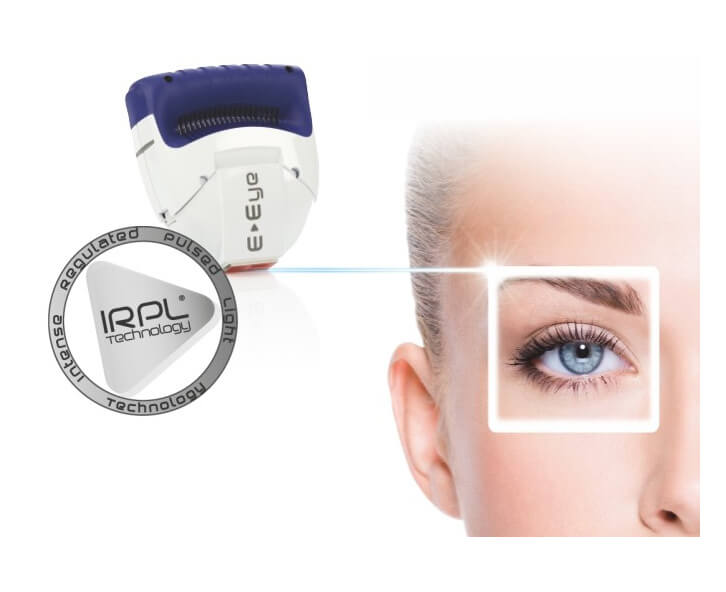
The E-EYE treatment is carried out by means of regulated light pulses (IRPL ®), which the E-EYE device emits by means of polychromatic pulsed light. These light pulses activate the nerve fibers of the Meibomian glands and thus indirectly influence the production of the secretions. The IRPL (Intense Regulated Pulsed Light) technology used is the only method in the world that is certified for the treatment of the meibomian glands.
The eye treatment only takes a few minutes and is 100% safe and painless. The patient wears metal eye protection cups during the short treatment. The light pulses stimulate the Meibomian glands and thus their secretion and thus achieve an improvement in the durability of the tear fluid.
The dehydration of the surface of the eye and the associated symptoms subside. Only a few hours after treatment with E-EYE, patients can notice a noticeable improvement.
Further tests with patients have also shown that all symptoms such as dryness, redness, itching, fatigue, blurred vision or frequent blinking of the eye after eye treatment have significantly decreased and completely disappear. In total, the eye treatment should be performed three times and according to a defined schedule: treatments are performed on day 0, day 15, day 45 and day 75 (optional).
Hat Ihnen dieser Beitrag gefallen? Teilen Sie ihn mit anderen!