
Cataract surgery (cataract operation) is a routine procedure that, in most cases, leads to a significant improvement in vision. However, some patients are dissatisfied after the procedure. In some cases, complications such as inflammation or a so-called aftercataract can occur, which may cloud the vision again.
In other cases, the new lens may not produce the expected result, or visual disturbances, such as cloudiness or shadows, may occur. These undesirable outcomes can lead to dissatisfaction and frustration among patients.
Today, cataract surgery is performed on an outpatient basis at a day clinic, so general anaesthesia is not necessary. Thanks to special anaesthetic drops, cataract surgery is not painful for most patients.
In this article, we will take a closer look at the possible causes of—and solutions for—dissatisfaction after cataract surgery.
Although cataract surgery is generally safe and successful, some patients may still be unhappy with the results or experience problems after cataract surgery. Reasons for dissatisfaction include:
Although most complications are uncommon, you should consult your ophthalmologist if you are not satisfied with your vision after surgery.
Below, we discuss each complication in more detail.
It is normal for patients to experience blurred vision for the first 48 hours after cataract surgery, as the eye and brain need time to adjust to the new vision.
In most cases, vision improves noticeably within the first few days after treatment. The healing process and the gradual improvement in visual acuity typically take about four weeks. Regular follow-up examinations with the ophthalmologist are important to monitor the recovery of visual acuity.
A monofocal lens implantation can replace the clouded natural lens and lead to a significant improvement in quality of life. However, it only improves distance vision, and visual aids are needed for other distances. For this reason, many cataract patients opt for multifocal lenses, as they provide clear vision at multiple distances and thus improve quality of life.
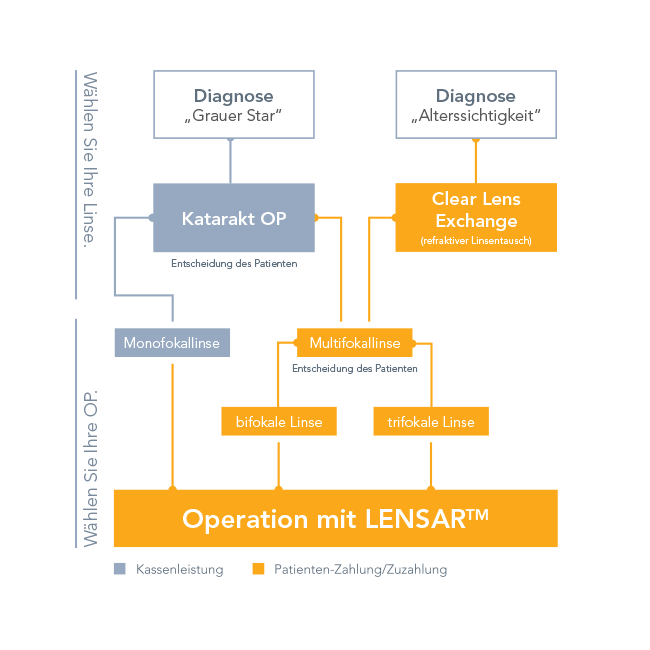
A disadvantage of multifocal lenses is that they are usually not covered by statutory health insurance, so patients must either have private health insurance or pay for the additional service themselves. Here is an infographic showing when health insurance covers the costs of cataract surgery.
After cataract surgery, slight pain, a sensation of pressure, and itching in the eye may occur; these can be treated with eye drops. The eye should not be rubbed or pressed, and activities such as driving or operating machinery should be avoided.
The dressing can be removed after four hours, or it will be removed the next day during the follow-up examination of the ocular lens. Antibiotic eye drops are prescribed to prevent infection.
Other tips for recovery after cataract surgery include avoiding screen time and taking steps to protect your eyes, for example by wearing sunglasses.
Some factors increase the risk of complications during cataract surgery, such as:
If one or more of these risk factors are present in a patient, they should be discussed with the attending physician to ensure the best possible treatment and to minimize potential complications.
Cataract surgery, for example, can cause inflammation, a secondary cataract, or a problem with intraocular pressure. These complications can impair vision and may require further treatment.
Below, we will explain some of these complications in more detail.
During cataract surgery there is a risk of rupture of the posterior capsule, which can lead to complications. Risk factors for vitreous loss from a capsular rupture include narrow palpebral fissures, deep-set eyes, eye diseases such as glaucoma, and a history of vitreous loss.
Systemic risk factors such as diabetes, obesity, and high blood pressure also increase the risk. Early detection is crucial to prevent complications such as retinal tears or inflammation.
Cystoid macular edema occurs in 1–2% of cataract surgeries, making it the most common complication. It manifests as reduced central vision and a scotoma — a localized visual disturbance in a specific area of the visual field. Diagnosis and monitoring are performed using optical coherence tomography (OCT). This imaging technique visualizes the layers of the eye with high resolution.
The increased permeability of blood vessels near the point of sharpest vision (the perifoveal capillaries), as well as impairment of the blood-ocular barrier, can cause fluid to accumulate in cavities known as “cystoid spaces”.
A serious complication of cataract surgery is endophthalmitis — an inflammation that occurs when microorganisms enter the eye. Risk factors include unsterile instruments and poor hygiene. Staphylococcus epidermidis is the most common infectious organism that can enter the eye.
Retinal detachment is a serious late complication of cataract surgery. Patients with high myopia or a history of retinopathy are at greater risk.
It is common for patients who undergo cataract surgery to experience an increase in intraocular pressure after the procedure. However, this usually normalizes within 24 hours. If elevated intraocular pressure persists, it may be associated with other conditions, such as glaucoma.
The lens capsule surrounds the intraocular lens, which is replaced with an artificial lens during cataract surgery. The power of the artificial lens determines how far the patient can see clearly without reading glasses after the operation.
However, a secondary cataract, also known as posterior capsule opacification (PCO), can develop at the back of the operated eye and cloud vision again. To correct this, a procedure called YAG laser capsulotomy is used, in which a laser creates an opening in the back of the lens capsule. This procedure is painless and takes about two minutes. It can occur in anyone who has had cataract surgery and is not a cause for concern.
During the healing process, the eye may become dry and itchy. Patients often describe a gritty, dry, or scratchy sensation. Special eye drops can help relieve these symptoms.
If you are dissatisfied after your cataract surgery or experience complications such as a cloudy lens or a persistent refractive error, you should schedule a follow-up appointment with your ophthalmologist. Only then can an accurate diagnosis be made and appropriate treatment recommended.
There are also options to restore full near and distance vision after surgery. These include new glasses or contact lenses to improve vision. A laser eye treatment by ophthalmologists can also help restore vision.
Ophthalmologist Doctor-medic Liliana-Iulia Bányai is an expert in the field of laser treatment at the Eye Laser Center Stuttgart and at the Eye Laser Center in Karlsruhe, and will be happy to accompany you from the preliminary examination, as your surgeon, through to the follow-up on your way to “new eyes”.
Hat Ihnen dieser Beitrag gefallen? Teilen Sie ihn mit anderen!